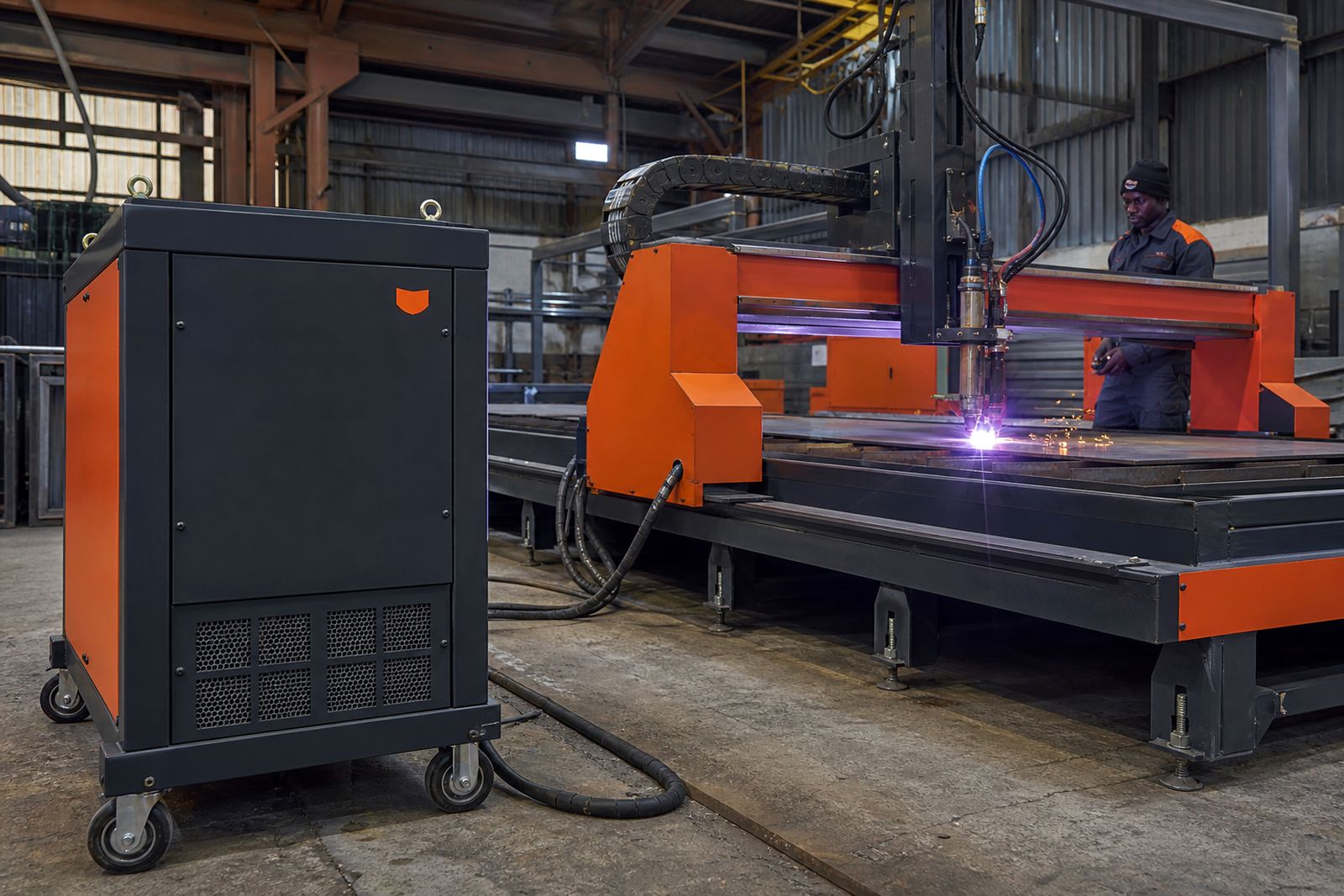
Air-plasma power units, 40 to 200 A
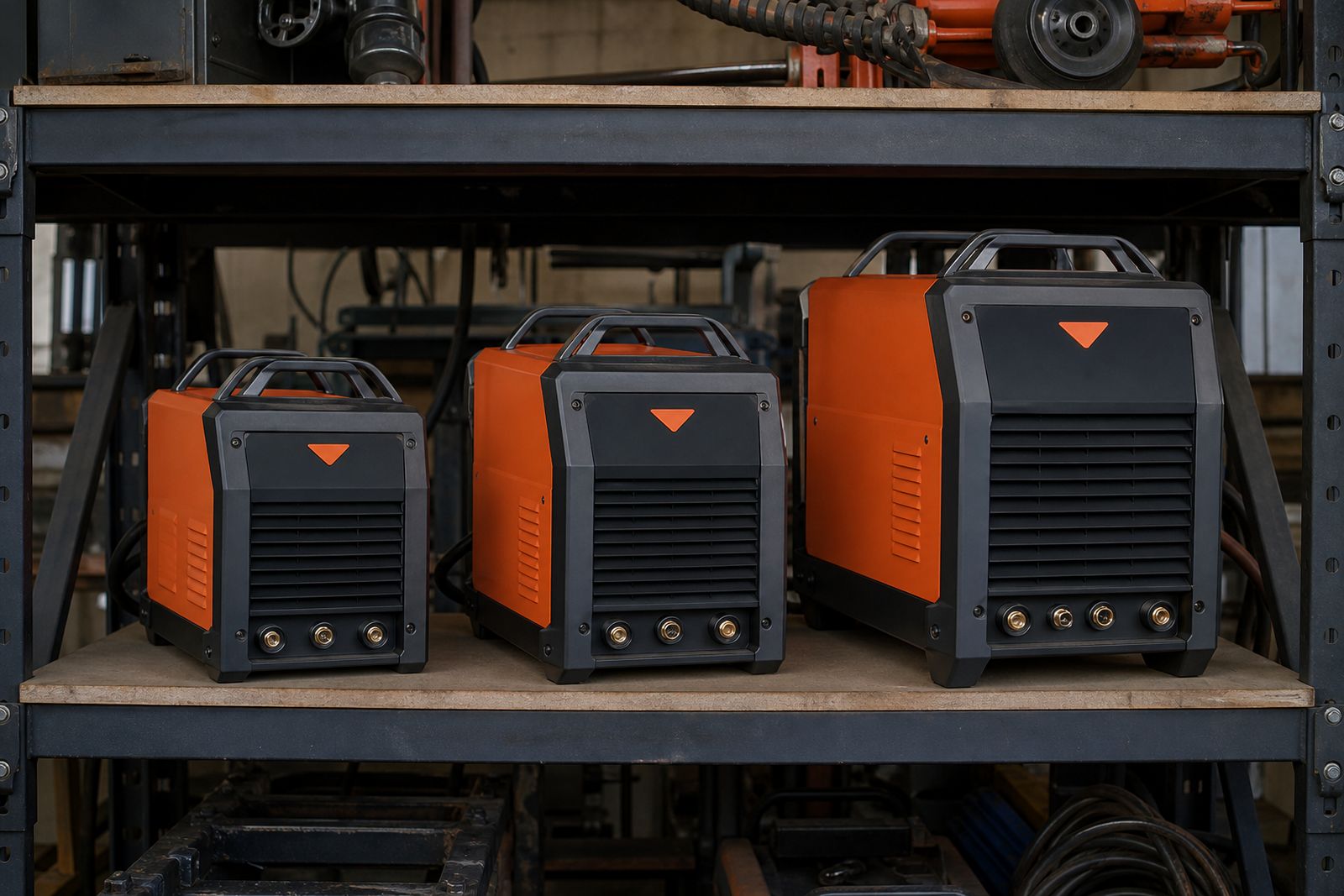
Our air-plasma power unit range covers light farm repair work through to thicker plate in fabrication shops and site jobs. The right choice depends on the steel you cut most often, how long the arc stays on, and the power you actually have where the cutter must work.
Match amperage to the plate you cut every week
Amperage is best chosen around your usual material and regular plate range. A smaller unit can sever thicker steel at a slower travel speed, but edge quality, piercing comfort and daily output are often better when the machine sits in its normal range instead of at the top of it.
For farm maintenance, trailer brackets, gates, base plates and patch work, lower amp units are often enough. Once you move into regular bracket production, thicker flanges or longer runs on plate, stepping up in amperage usually saves time and reduces strain on both the torch and the operator.
- 40 to 60 A suits lighter repair work, thinner plate and short cut runs.
- 65 to 85 A is a common middle range for small fabrication shops cutting mixed jobs.
- 105 to 125 A starts making more sense where thicker plate appears often and cut lengths get longer.
- 160 to 200 A is aimed at heavier section work where faster travel and deeper piercing matter on real production days.
Duty cycle matters as much as raw cutting power
Two machines can both carry the same amp rating and behave very differently on a hot afternoon in Bloemfontein. If your work pattern is cut, stop, fit, tack, then cut again, a smaller duty cycle may be perfectly workable. If one operator stands at the gantry for long stretches cutting nested parts, heat load becomes a bigger issue and the power unit specification needs a closer look.
Shops making repeated parts should think beyond peak output figures. A machine that spends less time cooling down often gives a steadier day and fewer interruptions, even if the amperage jump looks modest on paper. This is one of the places where we help compare options through our contact form using the material range you actually see on the floor.
Single-phase or three-phase on your site
Site supply is often the deciding factor. Mobile welders and farm teams may need a unit that can work where only a lighter mains supply is available, while a fixed workshop can make better use of higher output equipment if the electrical side is in order. A 200 A class unit makes sense where the available supply can support it properly for most of its working life.
- Smaller amp units are easier to place in outbuildings, farm workshops and mobile setups.
- Mid-range units suit many small fabrication shops with stable mains power and regular plate work.
- Higher amp units need a site checked properly for input requirements, protection and cable runs.
- If generator use is part of the plan, size and power quality must be considered before settling on the plasma unit.
Air supply belongs in this discussion as well. A strong plasma source still needs clean, dry air if you want steady arc starts and a cleaner cut face.
Lower and higher amp units for different workloads
When buyers compare models, the useful question is how the machine fits the workday, the power supply and the travel expected between jobs. The trade-off is straightforward.
- Lower amp units are easier to move, easier on lighter site power and often a good fit for portable cutters used on scattered jobs.
- Mid-range units give a wider comfort zone on mixed thicknesses without becoming awkward for general workshop use.
- Higher amp units cut thicker plate with more authority, but they ask more from the supply and from the air setup.
- A unit chosen too small may still finish the job, but slower speed and harder piercing can cost more over a month.
- A unit chosen too large for the actual work can push up power needs and purchase cost with little day to day gain.
Torch style, compressor capacity and dry air
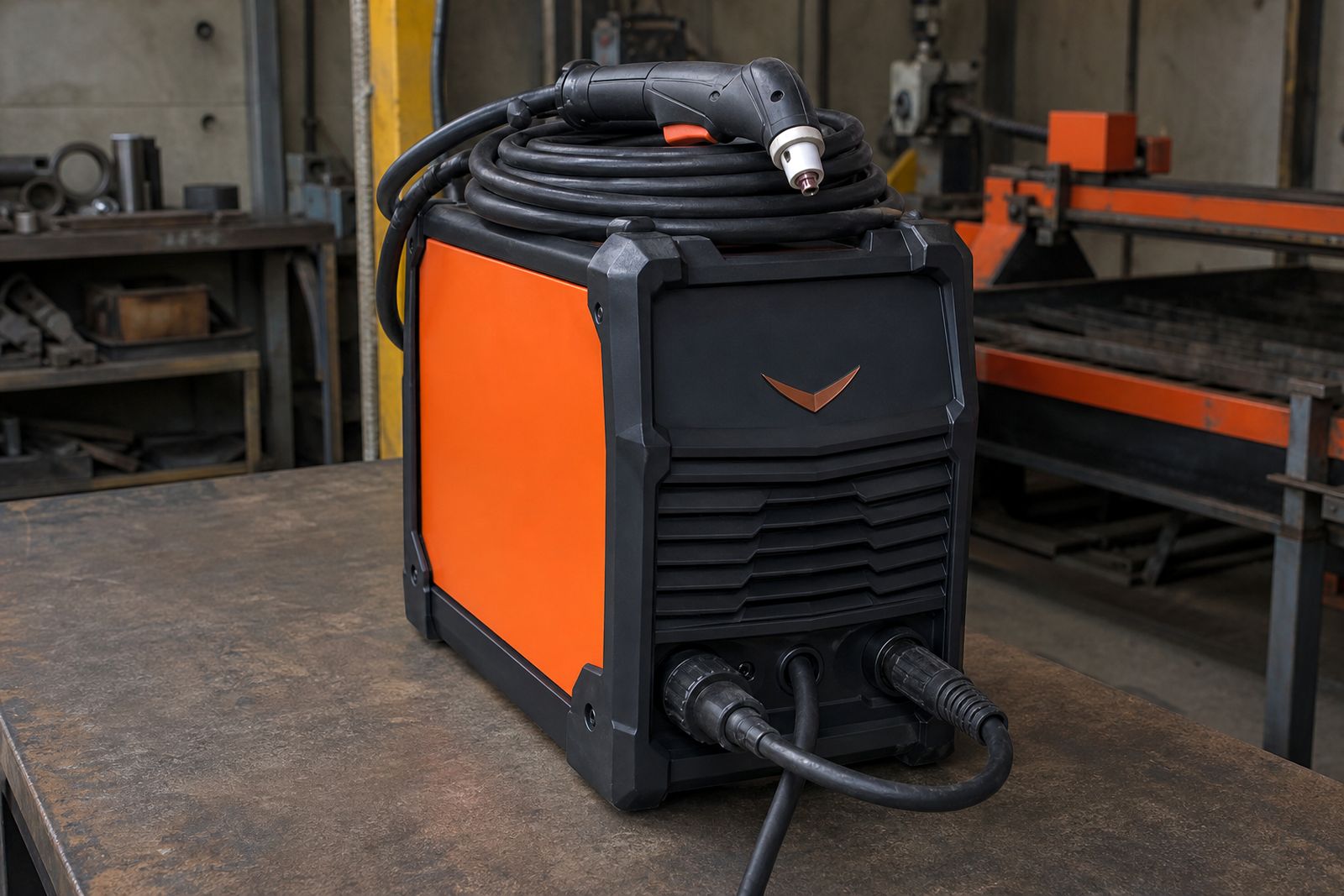
Power unit choice does not stand alone. Hand torches help on repair work where the operator moves between the table and the job on the floor, while machine torches suit gantry cutting where torch height and path control do the steady work. Many buyers take both routes into account from the start so the setup suits workshop production and field repairs.
Compressed air quality makes a visible difference. Wet air shortens consumable life and can spoil cut consistency, especially during summer storms or in coastal call-outs where humidity climbs. That is why we also cover compressors and air dryers as part of the package, with the air side properly included from the start.
Choosing a sensible package for your cutter
Most buyers match a power unit to a compact machine or portable gantry frame, the thickness range of their work, and the way jobs move between the shop and the field. Starter bundles help keep those pieces aligned, especially where the first machine must start earning without a long snag list.
From Bloemfontein we support buyers across the Free State, with call-outs into the Northern Cape, Lesotho border towns and further afield where portable cutting is part of farm or site work. If you want us to compare options properly, send the material thickness range, the heaviest plate you pierce, your available supply and whether the unit travels often through our contact form.
Questions we get asked
What amp range suits a small fabrication shop?
Many small shops land in the 65 to 85 A range because it covers mixed steel work without demanding the heaviest site supply. The better choice still depends on your usual plate thickness and how continuously the torch runs during a shift.
Can I buy a power unit without a full cutter package?
Air-plasma power units are available as part of the broader cutter range, along with torches and air equipment, so you can match the power source to your setup.
Do you handle heavy industrial gantries or retrofit older machines?
Our scope covers compact and portable CNC plasma cutters, power units, torches and air supply. We do not build heavy industrial gantries, do retrofits or focus on pre-owned machines.
Tell us about the job
Send sizes, materials and where you are through our contact form, and we will come back with the practical options.
Open the contact form