Field notes
Portable CNC plasma cutters in farm sheds, small workshops and mobile rigs around the Free State need the right support around them. Job conditions such as power quality, air supply, transport and setup affect cut quality, machine choice and day to day running costs.
Portable CNC plasma work across changing sites
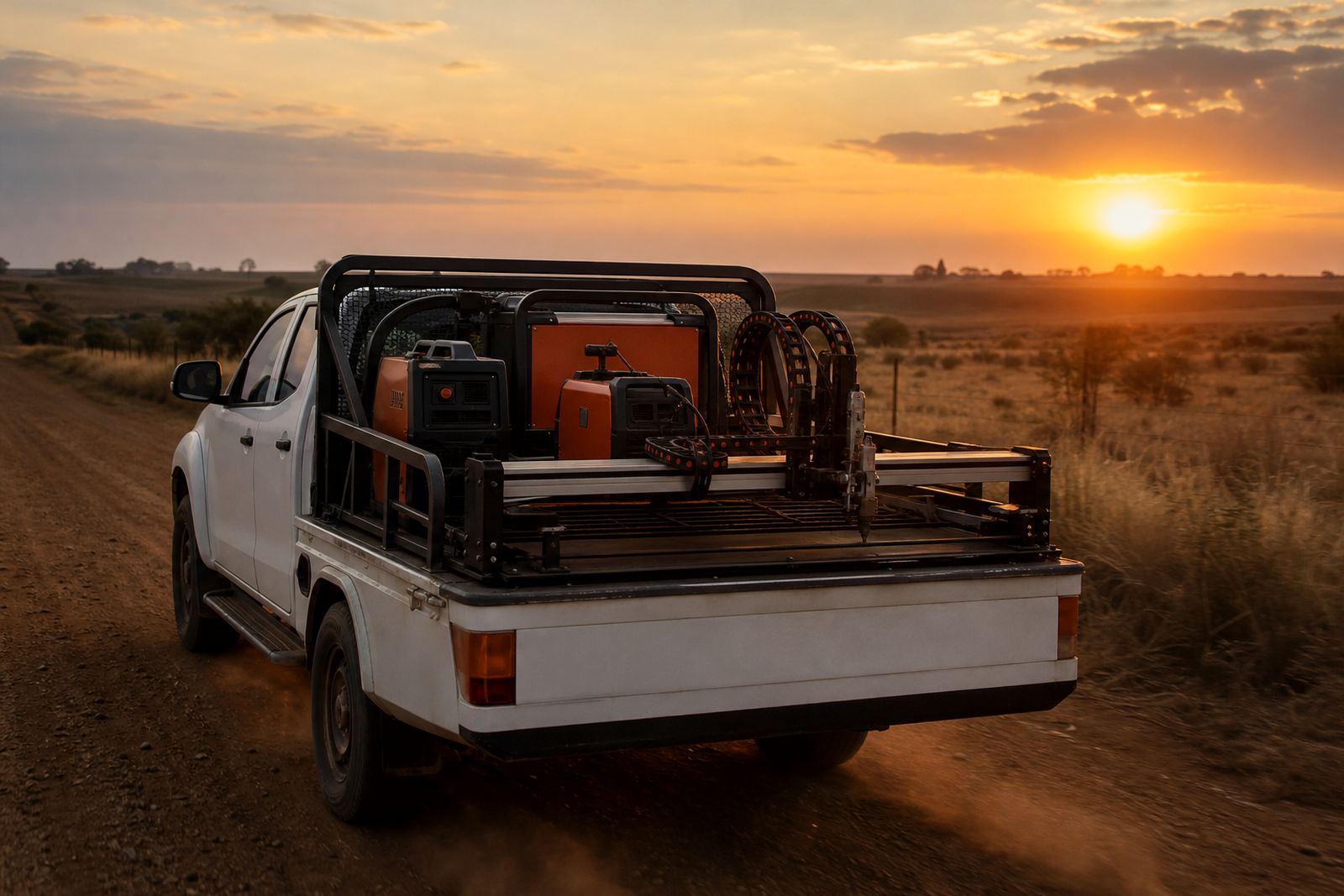
Portable CNC plasma work changes from site to site. A shed outside Bultfontein differs from a workshop in Bloemfontein, and a mobile trailer job near the Lesotho border can put very different pressure on power supply, air quality and space around the machine.
Farm workshops, repair bays, small steel fabrication floors and field setups each place their own demands on a compact gantry that must travel, unpack and cut reliably. The aim is to match the machine and support gear to the work in front of you and to the full job requirement, including more than amp rating alone.
The issues that usually decide the machine
Bed size matters, but it is rarely the only thing that decides whether a setup will work properly. On smaller sites, transport width, floor level, available single phase or three phase supply, compressor output and moisture in the air line all affect the result. In winter the air can look dry and still carry enough moisture to shorten consumable life, and on a long day that starts to show in the cut face.
- Choose by the largest plate size you cut every week, not the occasional once-off sheet.
- Check how the frame will move through gates, shed doors and trailer sides before choosing a wider bed.
- Match the power unit to the material thickness and expected duty cycle.
- Allow for clean dry air from the start if the machine will work outside town or off a mobile rig.
Compact bench units or portable gantry frames
Some shops need a small machine that stays on a bench and handles brackets, gussets and repair parts in a fixed area. Others need a gantry frame that can be packed, moved and set up where the steel is stored. The right choice usually comes down to how often the machine must travel and how large the plate is on a normal week.
- Compact bench units suit short part runs, smaller components and shops with one dedicated cutting spot.
- Portable gantry frames suit longer plate, trailer-based work and yards where the table layout changes.
- A smaller bed often saves floor space and handling time if most parts fit well within that cutting area.
- A larger bed earns its keep when full sheet use is common and repositioning plate wastes too much time.
If your work shifts between workshop jobs and farm call-outs, a portable frame with the right air and power support usually gives more room to move. If the cutter will stay in one place most of the time, a compact format can make daily setup easier.
Stable power on site
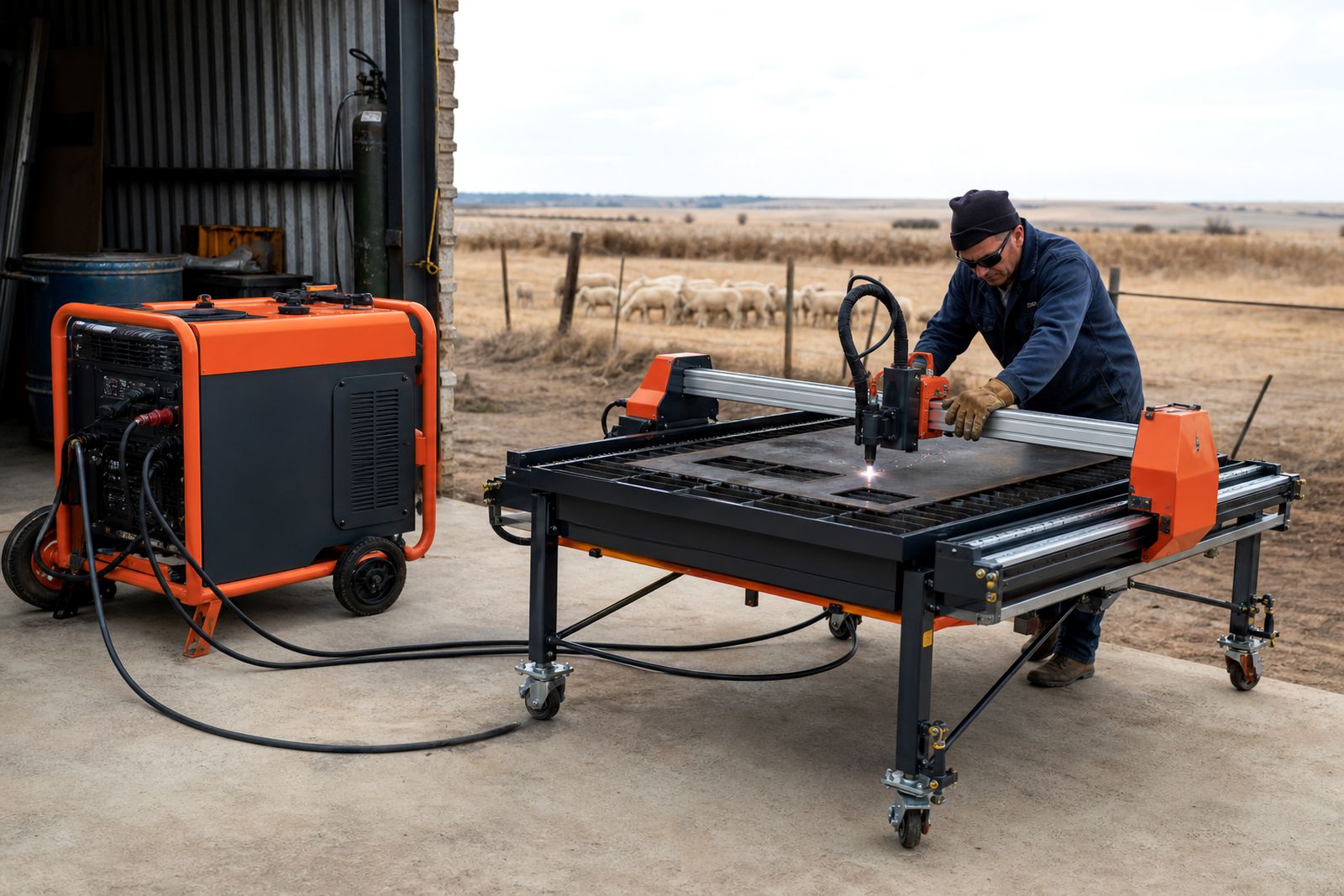
Mains supply in town is one thing. A long farm feed, an older workshop board or generator power out in the veld is another. Plasma cutting needs steady input from the power unit and stable motion from the CNC side, so poor power quality can show up as arc trouble, rough starts or interrupted cutting. Generator use and machine planning matter on jobs away from a fixed workshop.
Where mains power is unreliable, treat the cutter and the air system as one working package. The compressor draw, the size of the power unit and the way extension runs are handled all count. A setup that looks fine on paper can become awkward on site.
Air quality can cost more than people expect
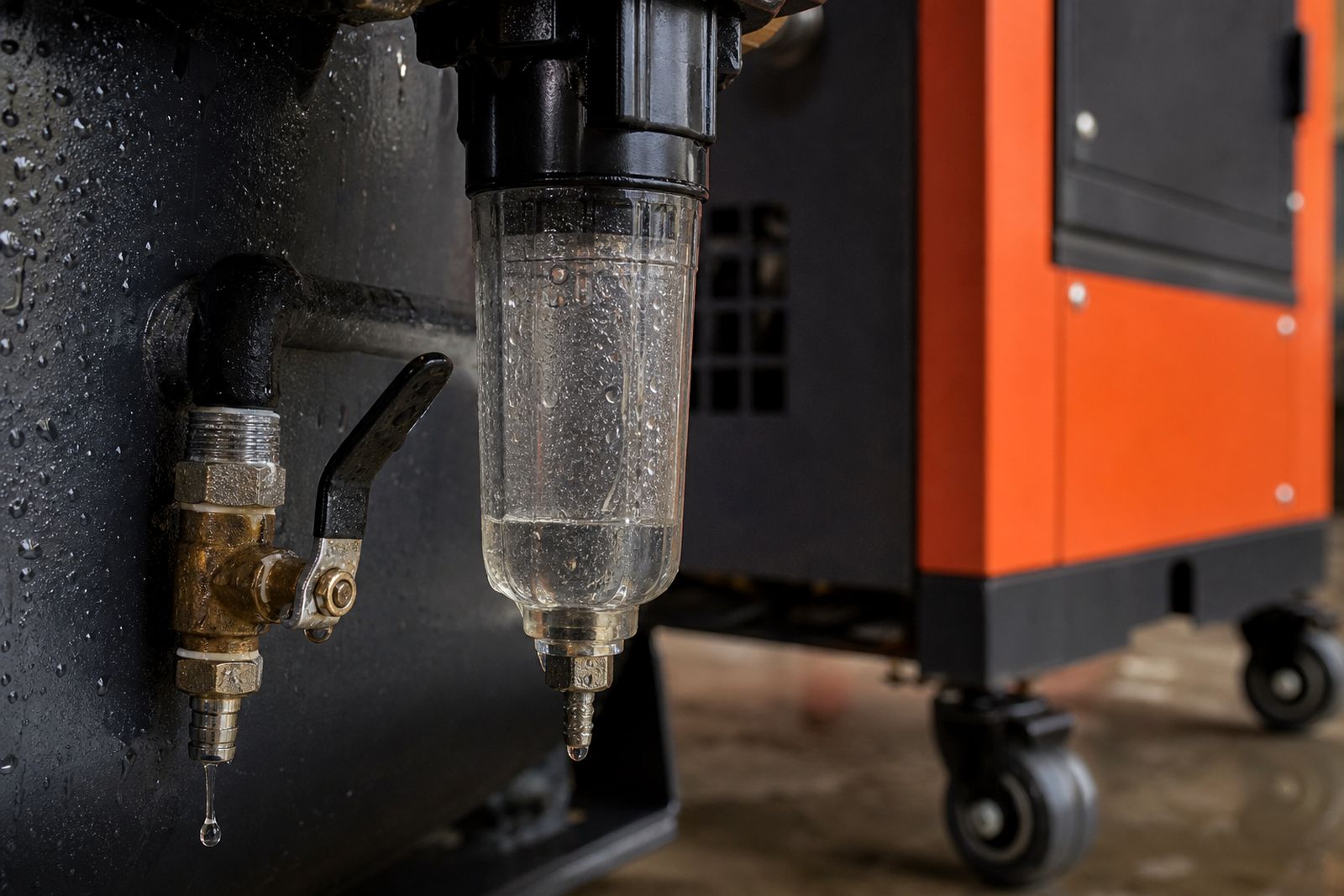
Bad air is one of the most common reasons for poor cutting results on small plasma setups. Oil carry-over, water in the line and pressure drop through undersized hoses affect torch life and edge finish far sooner than many operators expect. This is especially true when a machine is used in stop-start fashion across different jobs and different sites.
We include compressors and air dryers as part of the overall range. A dry consistent air supply keeps the torch working properly and helps the operator read the machine with fewer variables in the way. On the Highveld and across the Free State, cold mornings and warm afternoons can catch a system out if condensate control is poor.
- Shorter hose runs usually hold pressure better at the torch.
- Water traps alone are not the same as properly dried air.
- Mobile setups need drainage points checked often, especially after transport.
- Cut quality problems can come from the air supply, consumables and setup conditions as well as the CNC frame or torch height.
Machine selection, power units and operator training
Bed sizes, power unit options and operator training all help when comparing lower and higher amp output, or planning a package for workshop use versus mobile repair work. A starter bundle can make sense where the machine, torch and air side need to arrive as one workable set instead of separate boxes.
If you are weighing up a compact unit against a larger portable frame, start with the material sizes you handle most often then check the notes on power and air. From there you can compare the cutter options and send the working details through our contact form for a matched recommendation from the Bloemfontein team.
Questions we get asked
Which jobs and sites do you write up?
The focus is on day to day operating conditions such as generator use, air drying, transport, workshop setup and the practical limits that affect portable CNC plasma cutting on real jobs.
Are these notes only for Free State customers?
The examples are grounded in conditions around Bloemfontein and the Free State, but the points also help buyers in the Northern Cape, Lesotho border towns and other parts of South Africa.
Should I read the field notes before choosing a machine size?
They help you compare bed size, air supply and power requirements with the way the cutter will actually be used, which often narrows the choice more effectively than sheet dimensions alone.
Tell us about the job
Send sizes, materials and where you are through our contact form, and we will come back with the practical options.
Open the contact form