

Keeping air dry on the Highveld
Highveld air can feel dry enough to fool a workshop, yet plasma cutting still suffers badly from water in the airline. Most of the trouble starts after the compressor, where heat, cooling and poor drainage turn clean air into wet air at the torch.
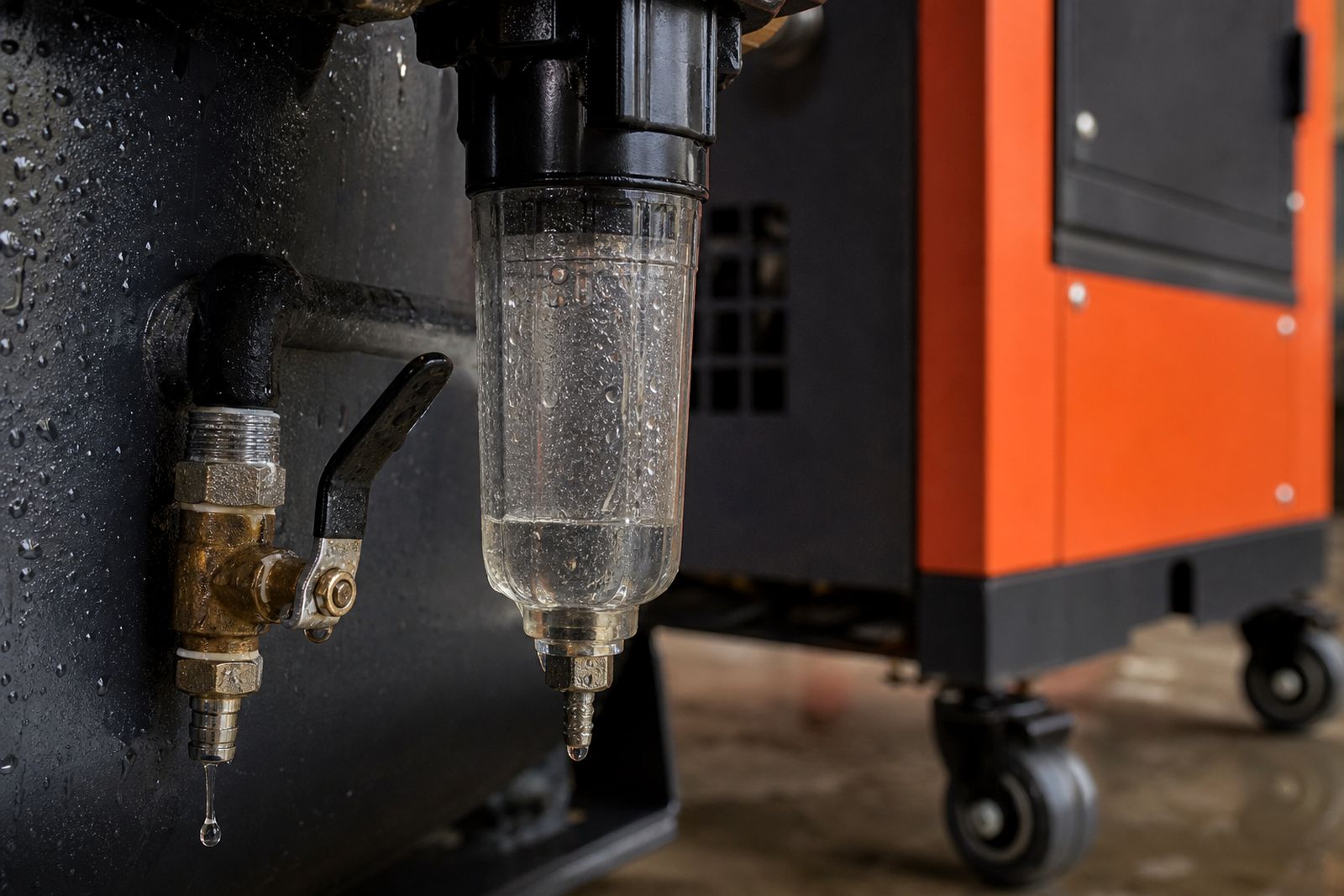
Moisture control matters in compressed air
A plasma system does not breathe open workshop air in the same way a person does. It takes air, squeezes it hard, heats it up inside the compressor, then sends that hot air into pipework and tanks where it cools. As it cools, moisture condenses and starts travelling down the line. That is why a shop in Bloemfontein, Welkom or Bethlehem can burn through tips and electrodes even during a dry spell with dust on the floor and clear sky outside.
The mistake is assuming low outdoor humidity means the torch is safe. In practice, compressed air always needs moisture control once pressure and heat enter the picture. A small portable cutter working off a compact compressor can suffer just as much as a larger setup if the air path is short, hot and poorly drained. You often only notice it after cut quality slips, the arc becomes unstable or the consumables show early wear.
- Compression raises air temperature sharply.
- Hot air carries water vapour further down the line.
- Cooling in the receiver, hose or filter bowl turns vapour into liquid.
- That liquid reaches the torch unless it is separated and drained properly.
What moisture looks like at the machine
Water contamination does not always arrive as obvious droplets. Sometimes it shows up as a fine mist, and sometimes the problem is oil and water mixed together in a dirty bowl. At the cutter, the signs are usually visible on the workpiece and inside the torch parts. Operators often blame amperage settings or speed first, but poor air is a very common cause.
Look for a harsher cut face, more dross than usual, trouble piercing cleanly and a nozzle opening that wears unevenly. If the arc sounds inconsistent, or the machine cuts well for a few minutes and then starts acting rough, moisture is worth checking before you touch the programme. One workshop we deal with in the central Free State found that the first sheet every morning cut acceptably, then quality fell away once the compressor heated up and the line started carrying more water. Nothing was wrong with the table. The air train was the issue.
- Short consumable life without an obvious collision.
- Black or dirty marks around the nozzle and shield.
- Arc instability during piercing.
- Fine rust inside couplers or bowls.
- Water visible when a line is cracked open.
The usual weak points in a small workshop
Portable plasma setups are popular because they fit farms, mobile repair teams and smaller fabrication shops, but the compact layout can make moisture control worse if the air system is rushed. A compressor parked close to the cutter sends very hot air straight into the first filter. That filter then has to do cooling and separation at the same time, which it is not good at. Long coiled hoses on the floor, sun on the tank, and drain cocks that are never opened all add to the problem.
Another common issue is relying on one small water trap mounted at the machine and expecting it to solve everything. A filter can only remove liquid water once the vapour has already condensed. If the air is still hot, much of the moisture passes through as vapour and condenses later, right where you do not want it. The result is a machine that behaves well for a short cut then starts spitting trouble. It catches many shops out.
Generator use can add a twist when a site setup puts the compressor and cutter in a tight temporary space with little airflow. The electrical side may be stable enough, but heat around the compressor climbs and the airline sees more water than the operator expects.
A layout that works better
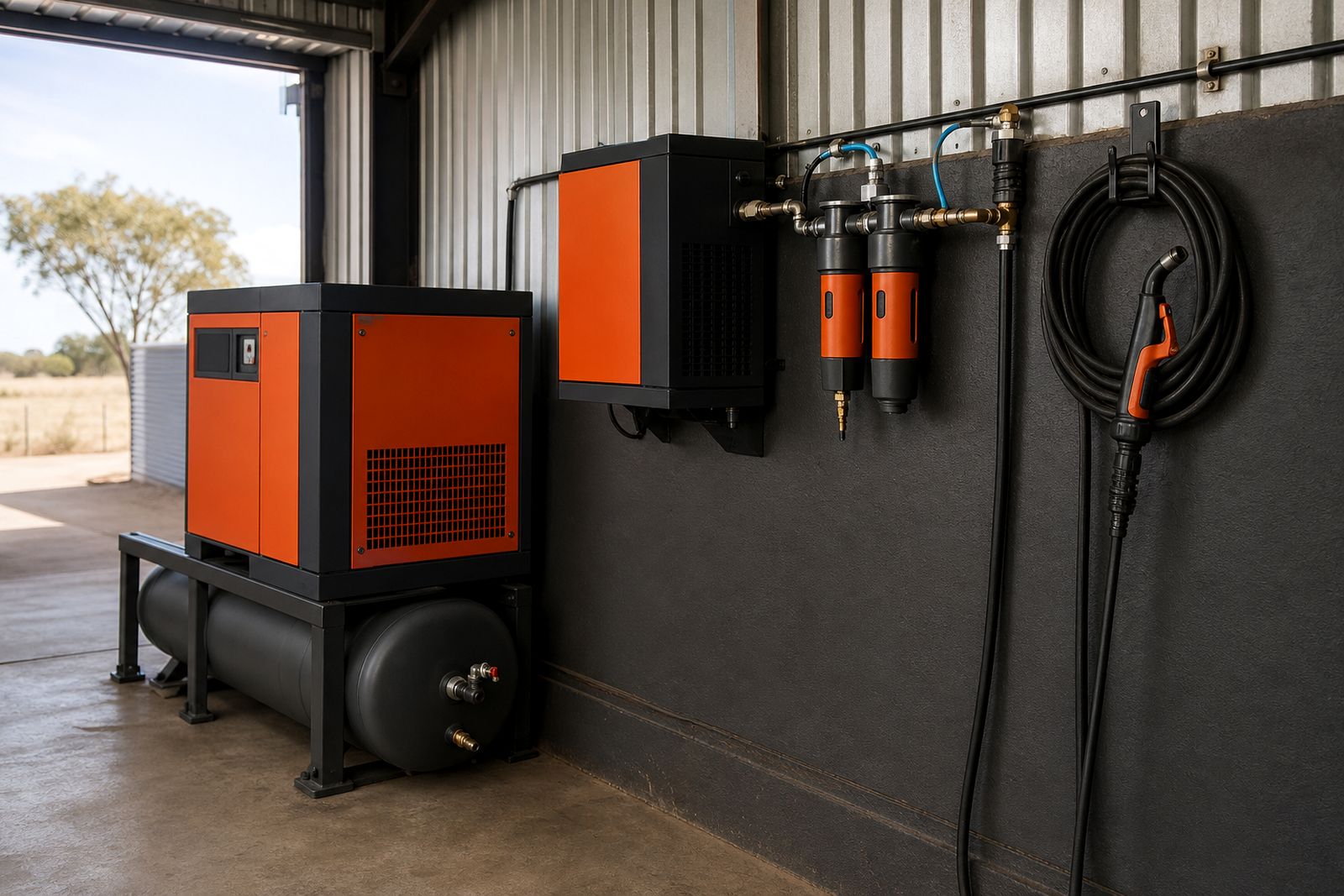
The fix is normally not complicated, but each part must do its own job. First let the air cool, then separate the water, then dry it further if the cutting load needs it. For a compact CNC plasma cutter, that means thinking about the full path from compressor to power unit, including the last filter bowl near the machine.
A better workshop arrangement usually includes the following steps:
- Place the compressor where ventilation is decent and hot discharge air can escape.
- Use a receiver tank in good condition and drain it often.
- Run enough pipe or hose after the compressor for the air to cool before the first separator.
- Fit a proper moisture separator with an accessible drain.
- Add a finer filter closer to the plasma power unit.
- Use an air dryer where the duty cycle is high or the finish matters.
- Keep hoses off wet floors and out of direct sun where possible.
On a farm or smaller branch workshop, even a simple drop leg and drain point can make a noticeable difference. If the line has nowhere for water to fall out before the machine, the torch ends up handling the mess. That is expensive air.
A Free State workshop example
In one small fabrication shop outside Bloemfontein, a portable gantry cutter was being used for base plates, brackets and repair parts. The owner had a decent compressor and assumed the dry inland climate was on his side. Consumables still wore too quickly and the cut edge turned rough after lunch most days. The machine settings were checked first, then the torch height and earthing, with no real improvement.
The actual problem sat in the air line. The compressor discharged through a short hose straight into a single filter fixed near the cutter. By mid-morning that bowl was warm, and by afternoon it was passing moisture. A longer cooling run was added between the compressor and separator. The receiver was drained properly at the start and end of the shift, and a dryer was fitted before the plasma unit. The operator also stopped leaving extra hose coiled in a heap beside the table.
Cut quality settled down, piercing became more consistent, and consumables stopped failing for no clear reason. It was a straightforward air-path clean-up with proper drainage. That is often the difference on the Highveld.
Checks that save tips, electrodes and lost cutting time
If you are running a compact or portable machine, a short inspection routine goes a long way. Most moisture faults start small and get ignored because the machine can still cut, just not well. By the time water is obvious, the torch parts may already be damaged.
- Drain the receiver before a cutting shift if the unit stood overnight.
- Empty separator bowls before they fill high enough to carry over.
- Check filter elements for dirt, oil and cracked seals.
- Listen for air leaks that force the compressor to run hotter and longer.
- Inspect hose couplers for rust or milky residue.
- Keep spare consumables sealed and dry in the workshop.
- Track cut quality through the day as well as on the first sample part.
If you are planning a portable setup for farm repairs, mobile welding or a small shop line, match the cutter with the right compressor and drying arrangement from the start. That saves frustration later, and it keeps the machine working as it should on ordinary steel jobs in inland conditions.
ArcPoint Cutters supplies portable CNC plasma equipment, air-plasma power units, torches and air supply options from Bloemfontein, with on-site operator training where needed across the Free State and further afield.
Questions we get asked
Do I need an air dryer if the workshop is in a dry part of South Africa?
An air dryer is often needed, even in a dry part of South Africa. Condensation still forms inside a compressed air system during dry outside weather. If the compressor runs warm and the air cools in the line, water will still form. A dryer becomes more important as cutting hours, amperage and finish requirements increase.
Can one small filter at the machine solve moisture problems?
Usually not on its own. A single filter near the cutter helps, but it cannot do all the cooling, separation and drying if hot air arrives straight from the compressor. Better results come from cooling the air first, then separating water, then using finer filtration or a dryer closer to the plasma unit.
Why do consumables fail later in the day instead of first thing in the morning?
That pattern often points to heat and moisture build-up in the compressor and line. As the system runs, the air gets hotter and carries more vapour. Once that vapour cools further down the line it turns to water, which reaches the torch and shortens consumable life.
Also worth a look
Tell us about the job
Send sizes, materials and where you are through our contact form, and we will come back with the practical options.
Open the contact form