Cutting on generator power
Farm work and remote steel jobs often happen away from a stable mains point. Generator sizing for an air-plasma unit needs a bit more thought than matching the amp figure on the front panel.
Size the generator from the power unit
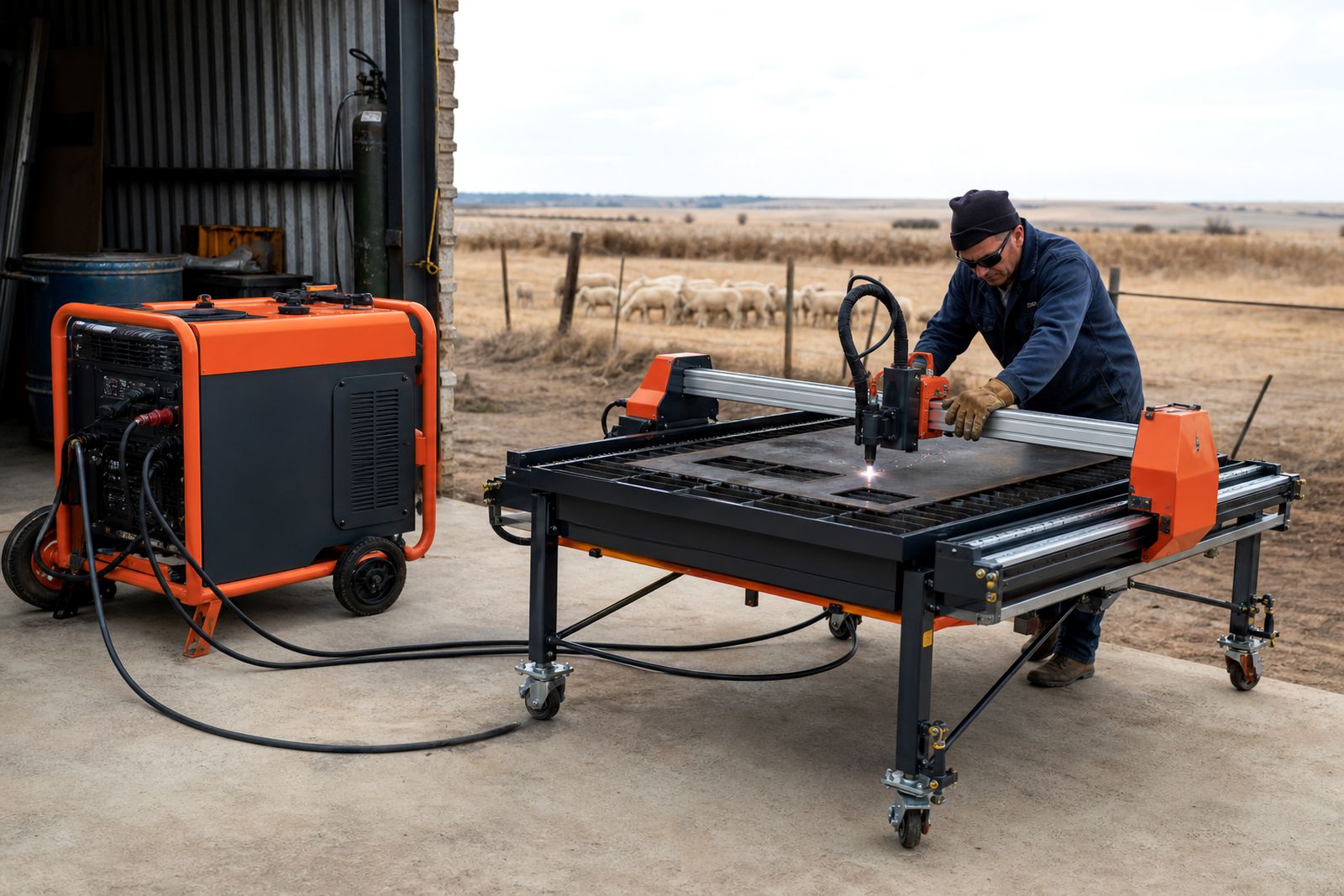
When a portable CNC plasma cutter is working away from the grid, the generator must first cover the air-plasma power unit. The gantry drive, controller and height control draw far less than the cutting source, so the big electrical load comes from the arc and the way that source starts and holds it. Many operators look at the cutter bed size and assume the larger frame needs the larger generator, but the air-plasma source is what decides the kVA.
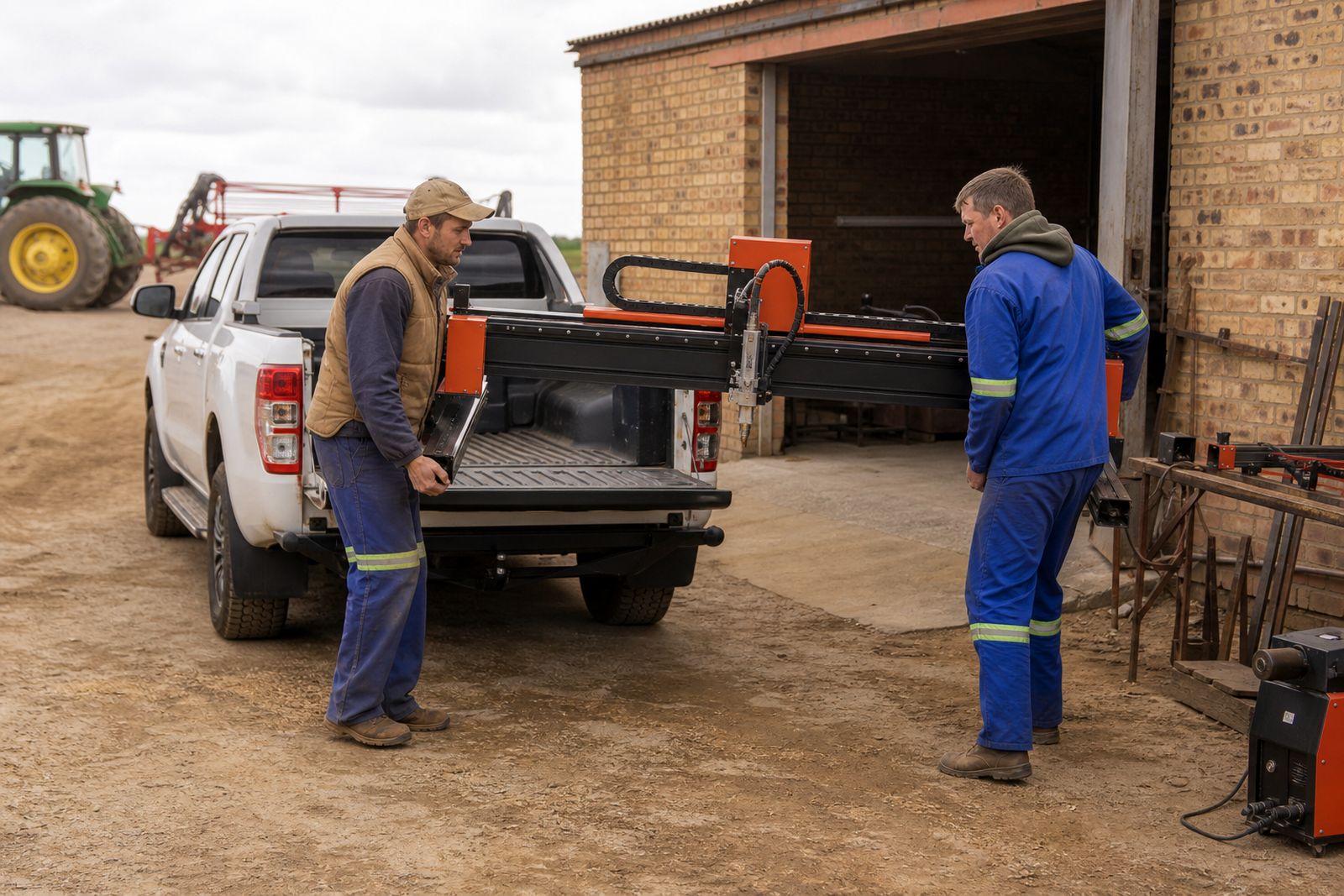
On a farm the job often sounds simple: cut cleats, gussets, base plates or repair sections where there is no workshop feed nearby. In practice, the generator must carry start-up demand, hold a steady output while the compressor cycles, and cope with dust heat and long extension runs. If any one of those is ignored you get nuisance trips, poor arc starts and rougher cut quality than the machine is capable of.
- Size from the air-plasma unit amperage and input demand.
- Add the compressor load if it will run from the same generator.
- Allow margin for start-up surge and hot working conditions.
- Keep the control side and plasma side on clean stable power.
Why the nameplate is only the beginning
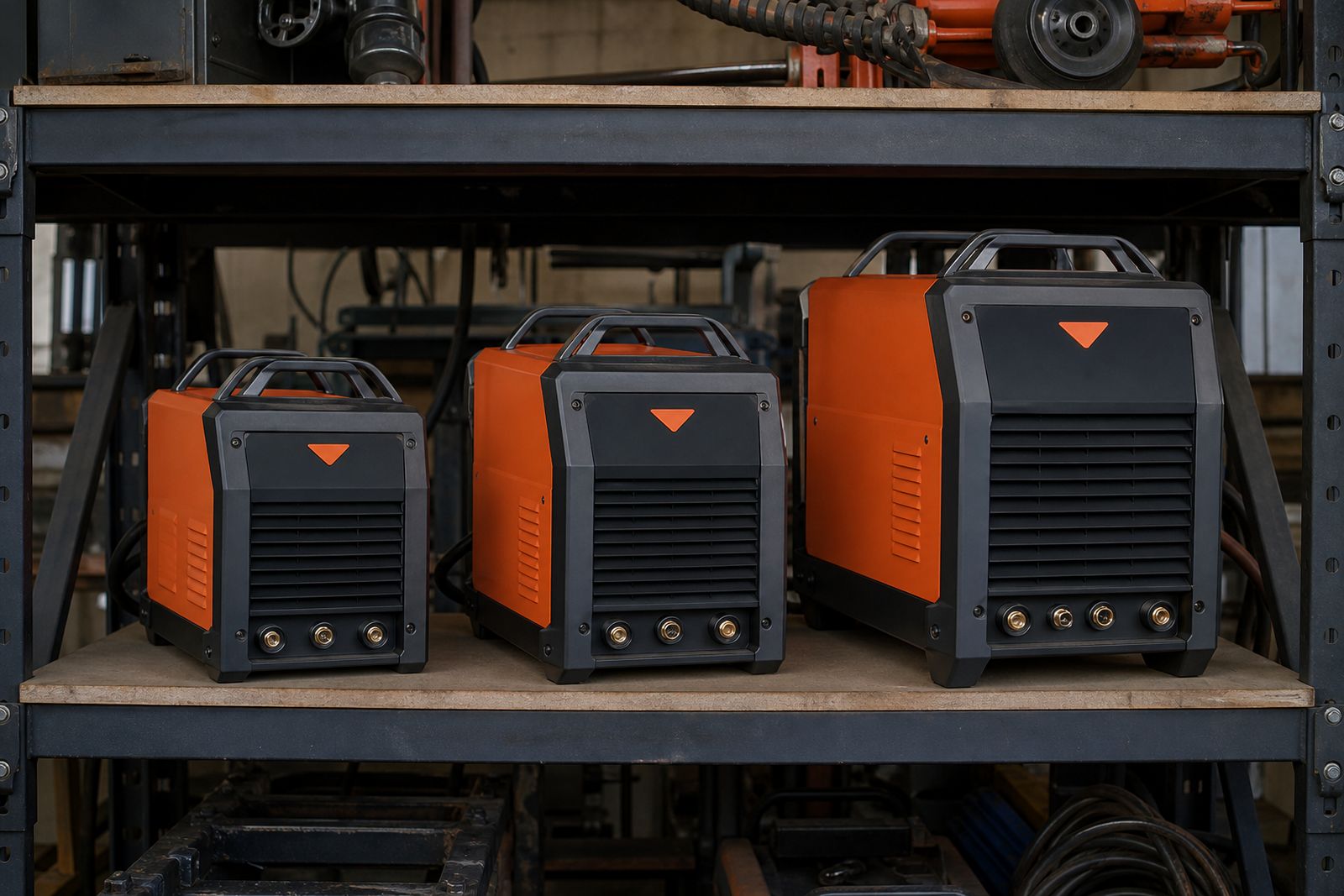
A power unit marked 40 A, 60 A or 100 A refers to cutting output. The generator supply at the socket depends on input current, voltage conversion, duty cycle and how hard the operator pushes the unit on thicker plate. Generator brochures also tend to advertise a peak number that sounds generous but cannot be held for a full cutting session. For plasma cutting, the continuous rating matters far more than the headline figure.
Another trap is power factor. A generator may look large enough on paper, yet still feel short of breath once the arc is established and the compressor kicks in. That is why we normally work from the continuous kVA rating, then add margin rather than trying to run right on the edge. A little spare capacity is cheaper than damaged electronics or a day lost in the veld because the arc keeps dropping out.
As a working guide, smaller 40 to 60 A air-plasma units can often run well from a properly rated generator in the light portable class, while 80 to 100 A units usually need a more serious set with stable output. Once you move higher the generator stops being an accessory and becomes part of the cutting system.
A farm example from outside Bloemfontein
One recent workshop pattern is easy to picture. A fabricator near Bloemfontein needed to cut 8 mm and 10 mm mild steel for trailer brackets and cattle handling repairs at a shed with no reliable mains feed. The cutter itself was compact enough to move in a bakkie, but the first generator on site was chosen by guesswork and it showed. Arc starts were erratic, the compressor dragged the supply down, and the torch left a dirtier edge than expected.
The job needed a generator with a proper continuous rating, shorter and heavier power leads, and an air setup that kept warm wet air out of the line. Once the supply settled, cut quality improved and the operator could hold a cleaner feed rate. It sounds obvious after the fact, but in the field it is often the generator and air package that make a decent machine look bad.
- The first setup had plenty of claimed peak output but too little steady reserve.
- The compressor and plasma source were competing for the same power at the wrong moments.
- After resizing the generator, the torch started cleaner and travel became more consistent.
- Dry air made as much difference as the electrical correction, maybe more.
Give the compressor its share
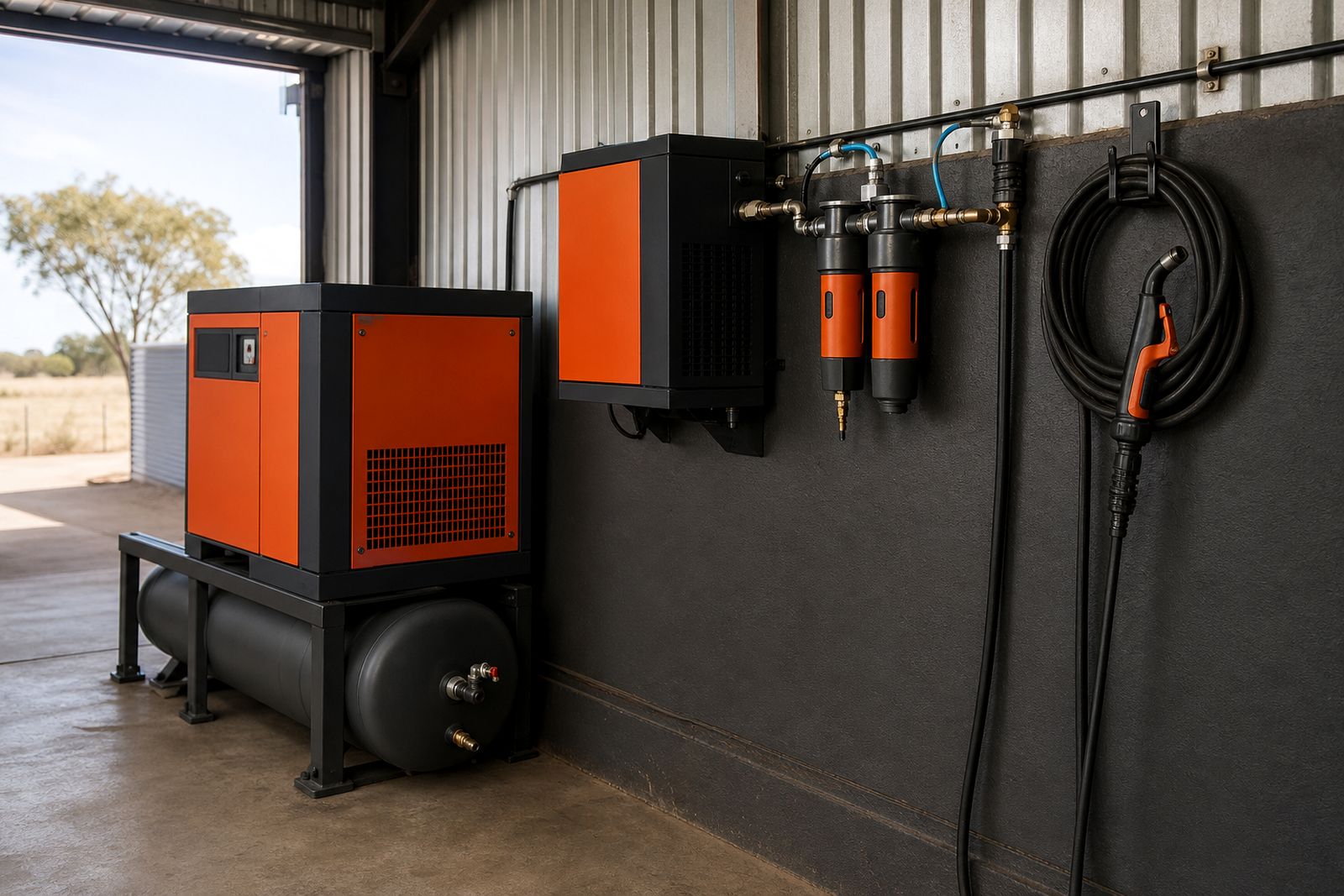
Remote cutting jobs rise or fall on air quality and air volume. If the compressor cannot keep up, or if it recovers too slowly because the generator is undersized, the plasma source will never stay happy for long. That is why generator sizing must include the air side from the beginning. A compressor motor has its own start-up demand, and that can be enough to pull voltage down just when the cutter needs a stable supply.
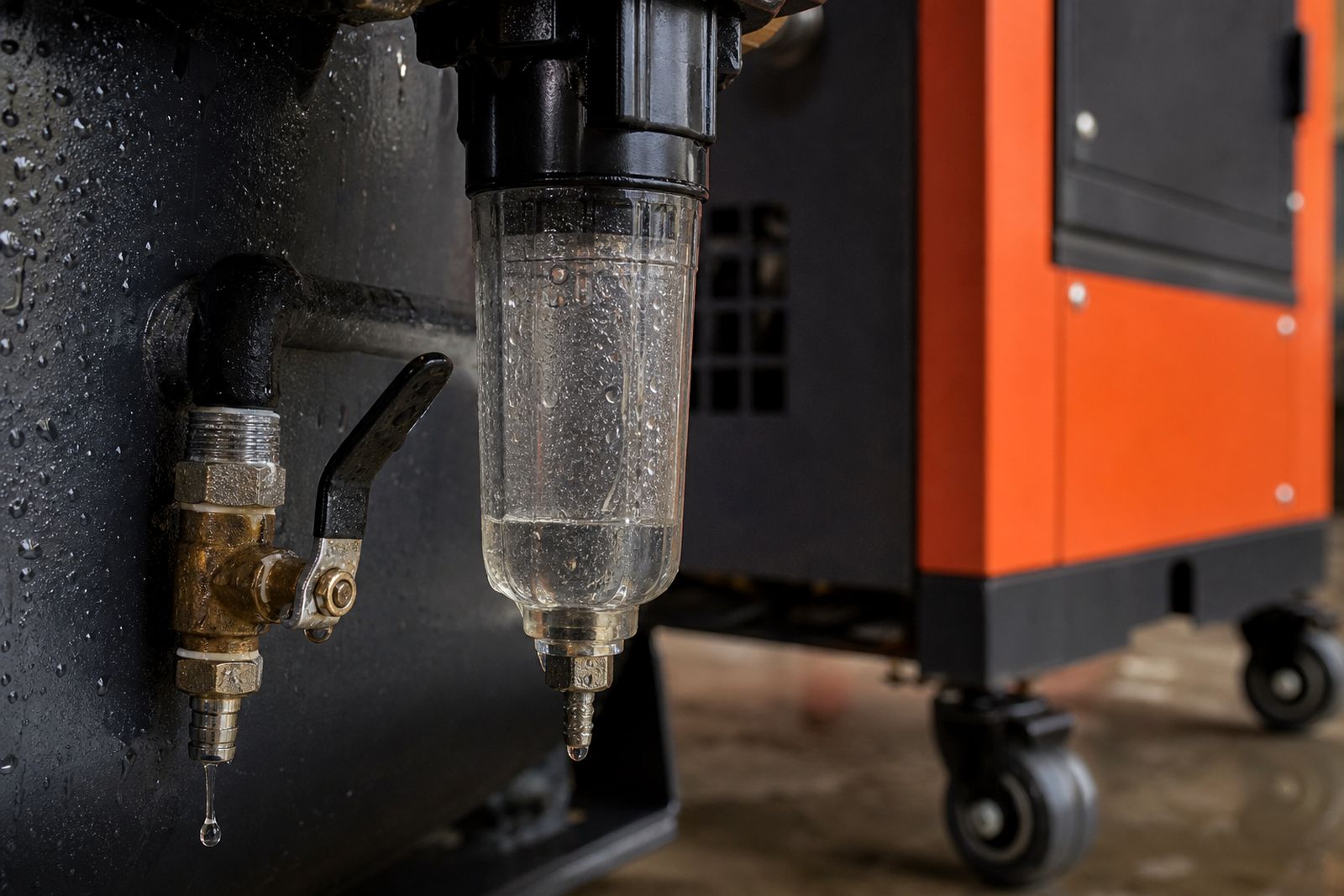
For mobile work across the Free State, especially in dry windy places where fine dust gets into everything, a receiver tank and an air dryer help the cutting source much more than people expect. The dryer also matters in summer storms and on coastal call-outs where humidity rises. Wet air shortens consumable life and can upset cut quality even when power is good.
- Check compressor motor demand as well as tank size.
- Use air filtration and drying suitable for the torch and nozzle set.
- Keep hose lengths sensible so pressure drop does not steal performance.
- Drain tanks properly before the day starts and during longer shifts.
Generator habits that protect the cut
Once the generator is correctly sized, the day-to-day habits still matter. Place the unit on firm level ground, keep it clear of grinding dust, and avoid starving it of airflow. Long light extension leads are common on farms, but they add voltage drop and heat, especially when coiled. A heavy cable run of the right length is worth carrying because it removes one more variable from the setup.
Earth clamping also deserves attention. A weak return path makes operators blame the power unit when the real issue is a poor work clamp connection on painted rusty steel. Clean a proper contact point and keep the return lead as direct as possible. The machine controller may keep moving nicely while the cutting side struggles, which is why the problem gets misread.
If the generator has economy or idle modes, they are usually best left off during cutting. Plasma needs a stable supply from a generator that holds the load steadily. Little details like that save frustration in the field and they cost nothing.
A sensible way to spec the set before you order
If you are choosing a portable cutter for farm work, decide first what thickness range you really need to cut cleanly and how often the machine will work away from mains power. That leads you to the air-plasma amperage, then to the generator size, then to the compressor and dryer package. Doing it in that order avoids buying a machine that looks right on paper but is awkward to support once it leaves the shop.
For work around the Free State, Northern Cape and Lesotho border towns, we usually ask about plate thickness, available transport, distance from the nearest stable power point and whether the compressor must travel with the cutter. Those details change the recommendation more than bed size alone. If you want us to look at a farm or mobile setup, send the expected cut range and the equipment already on hand through our contact form.
- List the material thickness you cut most often and include the maximum.
- Note whether generator and compressor travel on the same vehicle.
- Allow for reserve capacity rather than running every component flat out.
- Match the torch, power unit and air package as one working set.
Questions we get asked
Can I run a portable plasma cutter from any generator with the right socket?
The generator needs enough continuous output, stable voltage, and room for the compressor load if that will run from the same set.
Is a bigger generator always better for plasma cutting?
The best choice is a correctly rated set with steady output and a sensible margin for site conditions. Too little reserve causes more trouble than a modest amount of extra capacity.
Does the compressor need to be included when sizing the generator?
The compressor can be the hidden load that upsets the whole setup on remote jobs. Its running demand and motor start-up draw must be counted with the plasma source.
Also worth a look
Tell us about the job
Send sizes, materials and where you are through our contact form, and we will come back with the practical options.
Open the contact form