On-site operator training
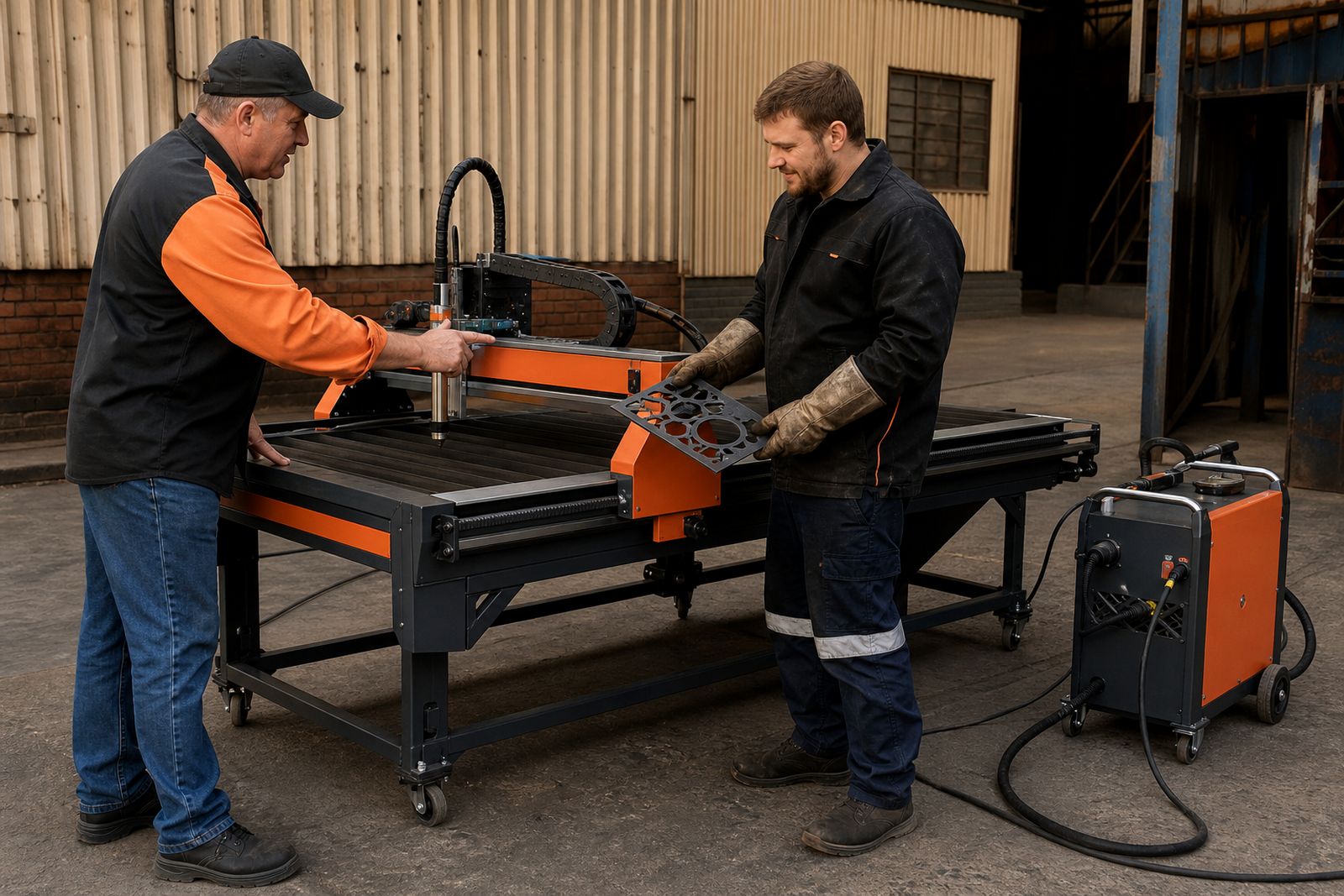
We train operators on the cutter and power unit that will be used for actual work in your shop or on site. The session runs over two days on your own bench so settings, air supply and material handling are covered in the place where cutting happens.
Two days that match your actual cutting work
This service is for buyers who want proper handover on a compact or portable CNC plasma cutter, with more than a switch-on and a few trial cuts. Training is done on your premises, using your bench, your material sizes and your air setup, so the operator learns the routine that fits the work in front of them. That matters on farms, in repair yards and in small fabrication shops where floor space is tight and every sheet is moved by hand.
We cover the machine frame, controller basics, torch setup, air-plasma settings, pierce height, cut height, speed selection and the small checks that keep cuts clean. By the end of the second day the operator should be able to set up, run a basic nested job, stop and inspect a cut, and adjust settings without guessing.
- Training is done on your own cutter and power unit.
- The standard format is two days on site.
- Suitable for one lead operator with one or two additional staff observing.
- Travel is available from Bloemfontein across the Free State and farther afield.
What is included on site
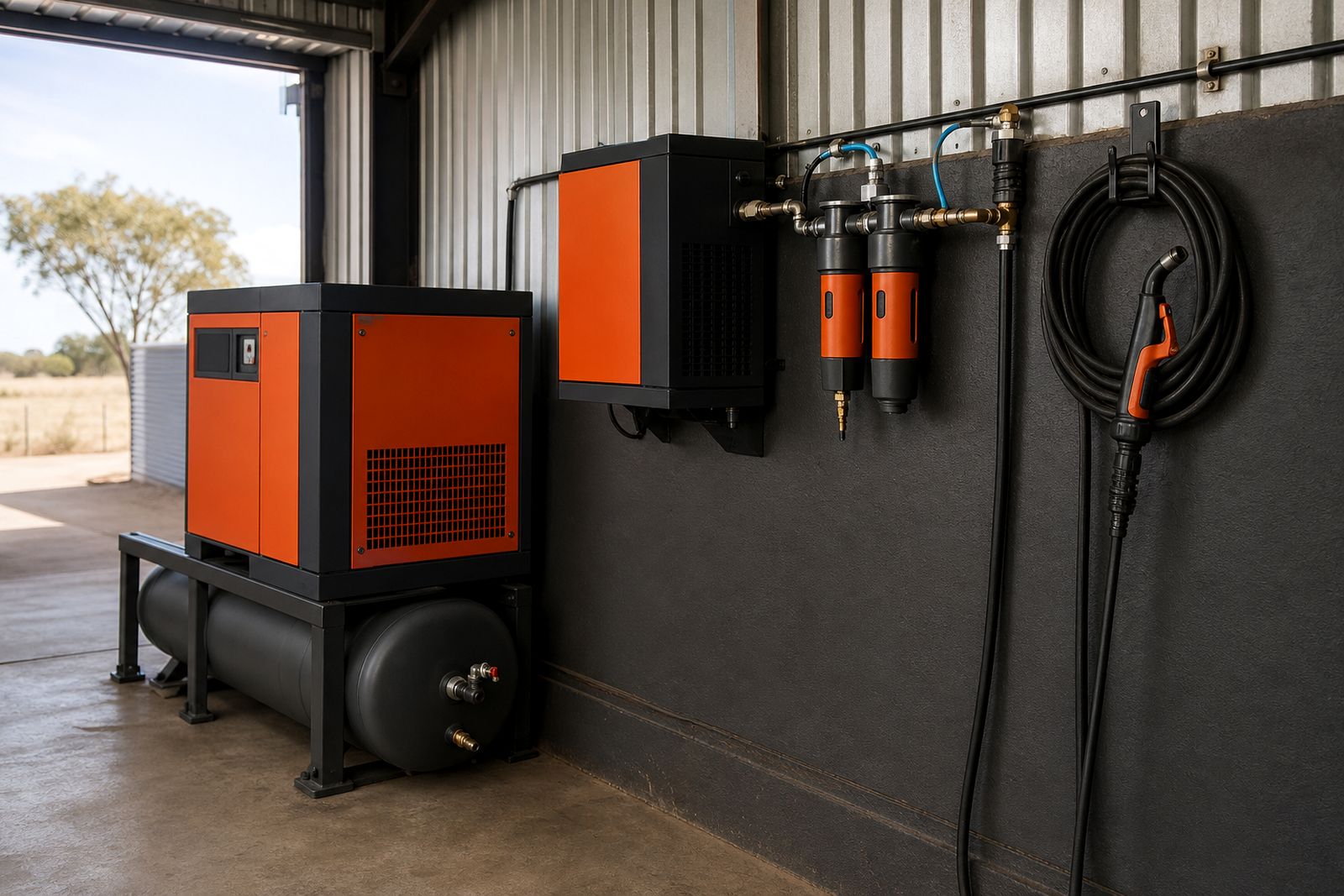
The first block deals with installation checks and safe startup. We inspect the bench, earthing, cable routing, torch leads, compressor delivery, moisture control and consumable condition before cutting starts. If there is a problem with air quality or mains supply we point it out there and then, because training on poor air only teaches bad habits.
From there we move into controller operation and cutting practice. Operators learn how to load a job, set the origin, confirm the plate position, dry-run the path and watch the first pierce properly. We also spend time on cut charts, because a machine can be perfectly square and still leave poor edges if amperage, speed and stand-off are wrong.
- Bench and machine setup checks.
- Controller navigation and job loading.
- Nesting basics for common plate sizes.
- Cut chart use for mild steel and routine thickness ranges.
- Daily cleaning and inspection points.
- Safe shutdown and packing away for portable units.
How the training runs from first cut to final handover
Day one starts with the mechanical and electrical side. We level the frame where needed, check rail travel, confirm torch movement and make sure the operator understands how each cable and hose is routed. After that we run straight cuts, circles and corner tests on sample plate so the operator can see what speed and torch height change on the edge. There is usually a bit of back-and-forth here, which is normal, because every shop has its own air line length and compressor behaviour.
Day two shifts toward normal production habits. We work through simple part layout, plate usage, sequence choice, lead-ins, pierce placement and how to avoid tipping small parts into the cut zone. The operator then runs supervised jobs with less input from us. Before we leave, we write down the working settings that matched your setup, including material thickness, amperage range and preferred travel speed where the result looked right.
We do not turn this into classroom theory. The point is to get the operator comfortable enough to cut saleable parts on the same bench from the next shift.
What to have ready before we arrive
The best results come when the machine is already in position and the work area is ready for plate handling. A portable gantry can be taught on a simple steel bench, but the bench must be straight enough for usable work and clear enough for the operator to walk both sides safely. If training will be done in a farm workshop or mobile bay, it helps to move unrelated repair work out of the way first.
- Installed machine frame or compact cutter in its working position.
- Power unit connected and tested for basic startup.
- Compressor with enough delivery for the selected amperage range.
- Air dryer or moisture separation in place.
- Sample plate in the thickness you expect to cut most often.
- A lead operator present for the full two days.
Please also have extension leads, earthing points and lifting help sorted out where needed. If generator power will be used on the site, tell us before booking so the training plan can allow for voltage behaviour and compressor load. A dry area for the controller matters more than people expect, especially where dust and grinding fines drift across the bench.
How training charges are worked out
Training is priced from the real factors on the job, not a flat figure for every site. The machine type matters, because a 600 x 600 mm compact unit is simpler to hand over than a larger portable gantry with a separate air train and longer rails. Travel distance from Bloemfontein is part of the total, as are access conditions if the team needs to reach remote Free State sites, Northern Cape work areas or Lesotho border towns.
We also look at how many operators need hands-on time, whether the cutter is being commissioned at the same visit, and whether generator operation needs to be covered. If extra plate is required for repeated test cuts, that is discussed up front. The clearest route is to send the machine model, your town, the power unit amperage and the main thicknesses you plan to cut through our contact form.
Aftercare once the operators start running jobs alone
Once the two days are done the operator should have a written settings record, a startup order, a shutdown routine and a short list of checks for poor cut quality. That usually includes air dryness, nozzle wear, incorrect stand-off, low travel speed, plate movement and poor earthing. Most early faults are routine setup issues that need a trained eye. They are often picked up before they become major machine problems.
Where a customer has bought the cutter, power unit, torch package and air equipment from us, follow-up support is tied to that installed equipment. We can help with working methods, machine operation and the practical use of the package supplied. Training does not cover heavy industrial gantries, retrofit control swaps or unrelated second-hand equipment, because that falls outside the machines and layouts we sell and support.
If you need the session arranged with a new portable cutter order, mention it on our contact form so the training visit can be planned around delivery and installation.
What our Portable Plasma Cutter customers say
Verified Google reviews
Questions we get asked
Is this training only for new machine buyers?
It is mainly arranged with new cutter installations, but it can also be added for customers who already have one of our compact or portable machines in place and need formal operator handover.
Do you teach drawing or advanced CAD work?
The focus is machine operation on site: setup, basic nesting, cut settings, safe running and routine checks. If your work depends on detailed drawing preparation, say so when you enquire and we will note what level is needed.
Can training be done at a farm or remote workshop?
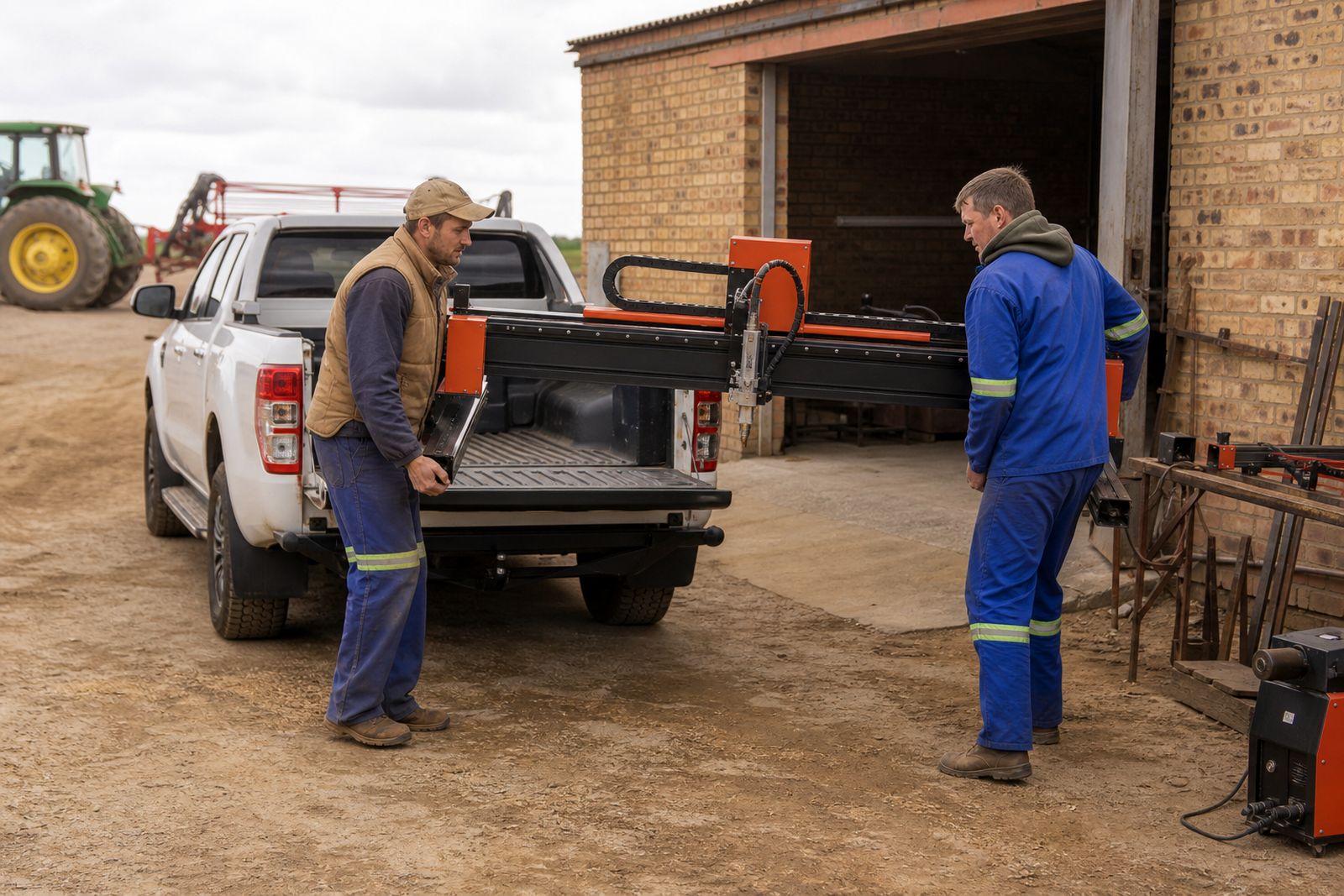
Training can be done at farms, small fabrication shops and mobile work sites, provided there is safe access, a workable bench, power and compressed air for the cutter being trained on. We travel from Bloemfontein to these sites.
Also worth a look
Tell us about the job
Send sizes, materials and where you are through our contact form, and we will come back with the practical options.
Open the contact form