Bench-standard compact cutters
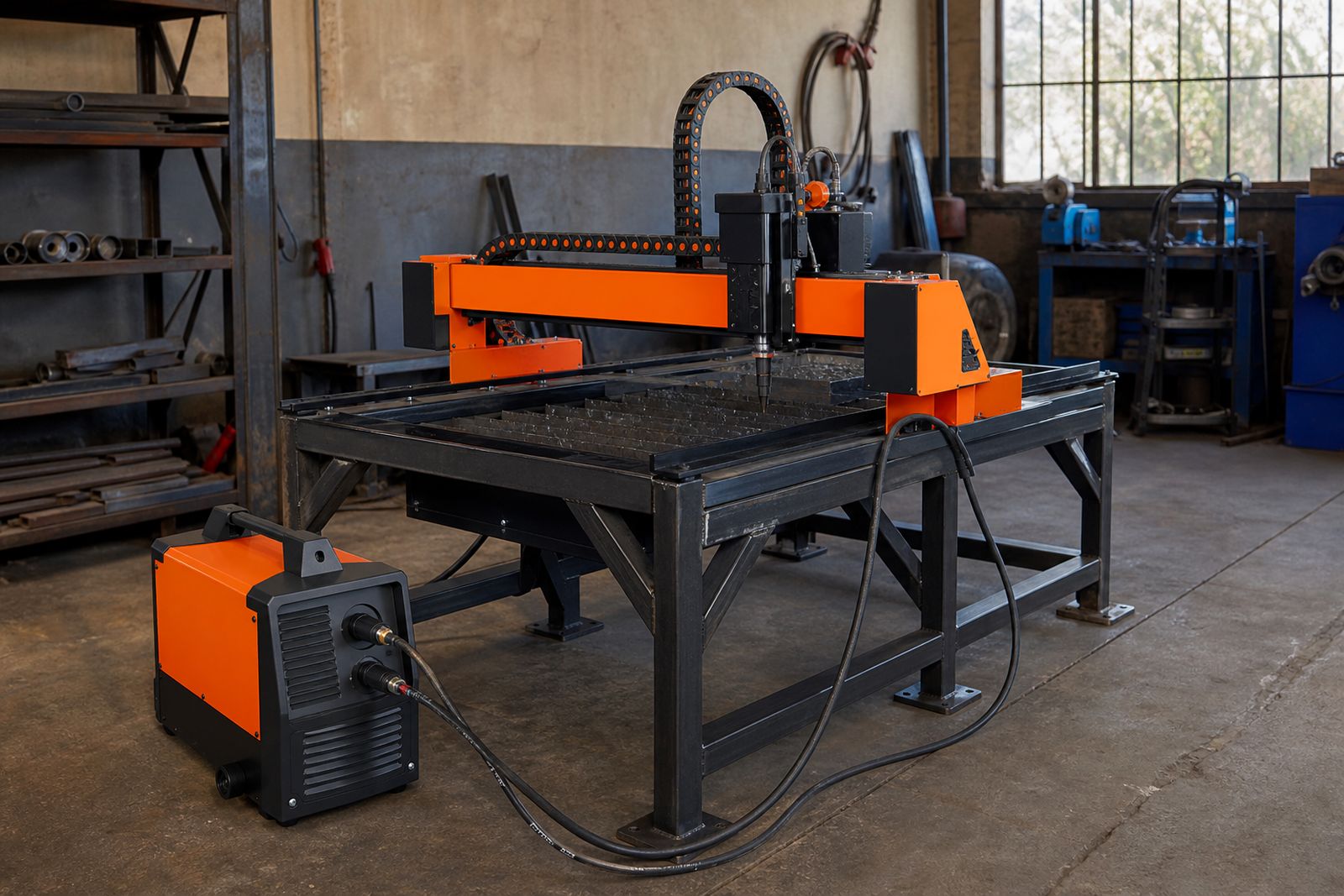
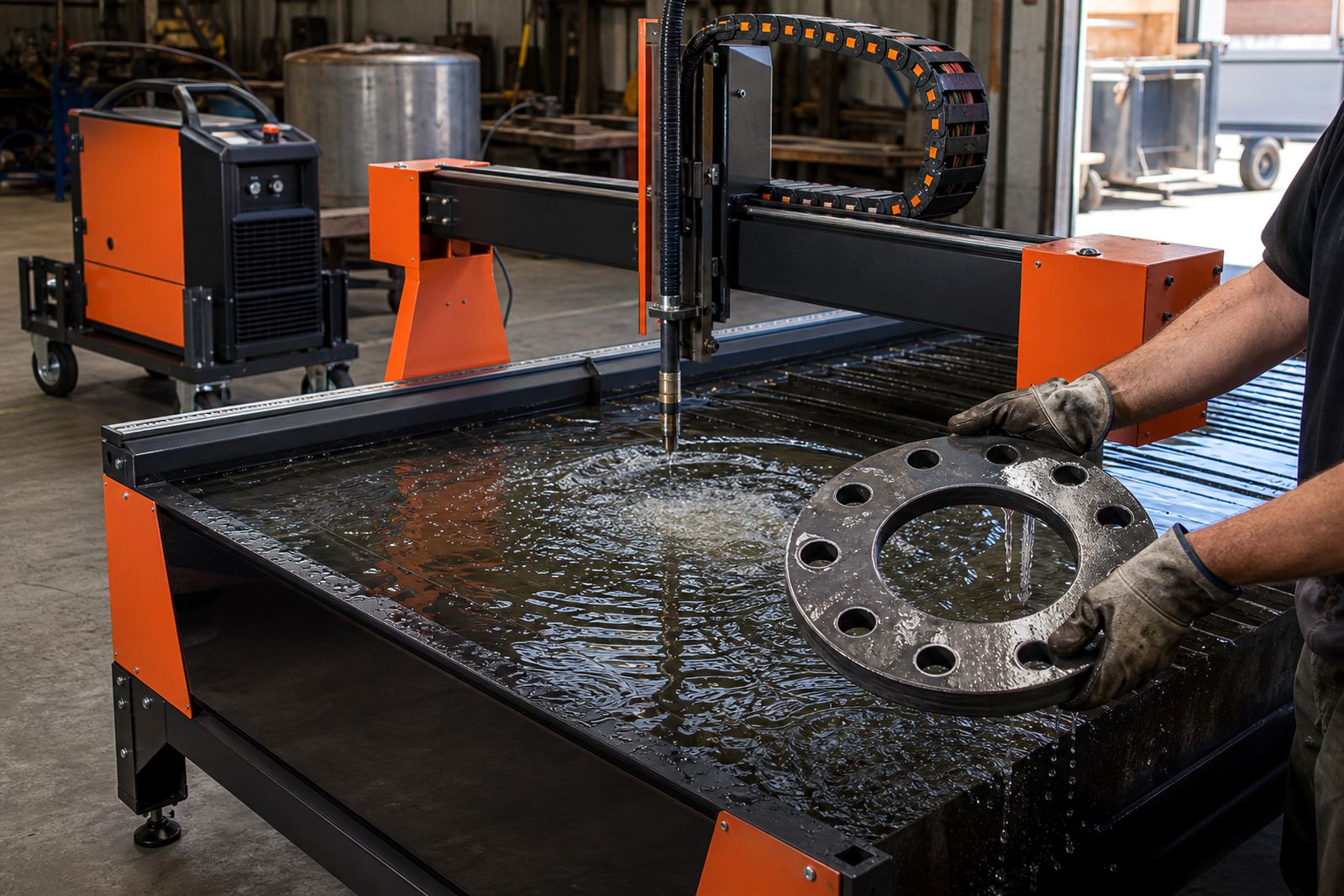
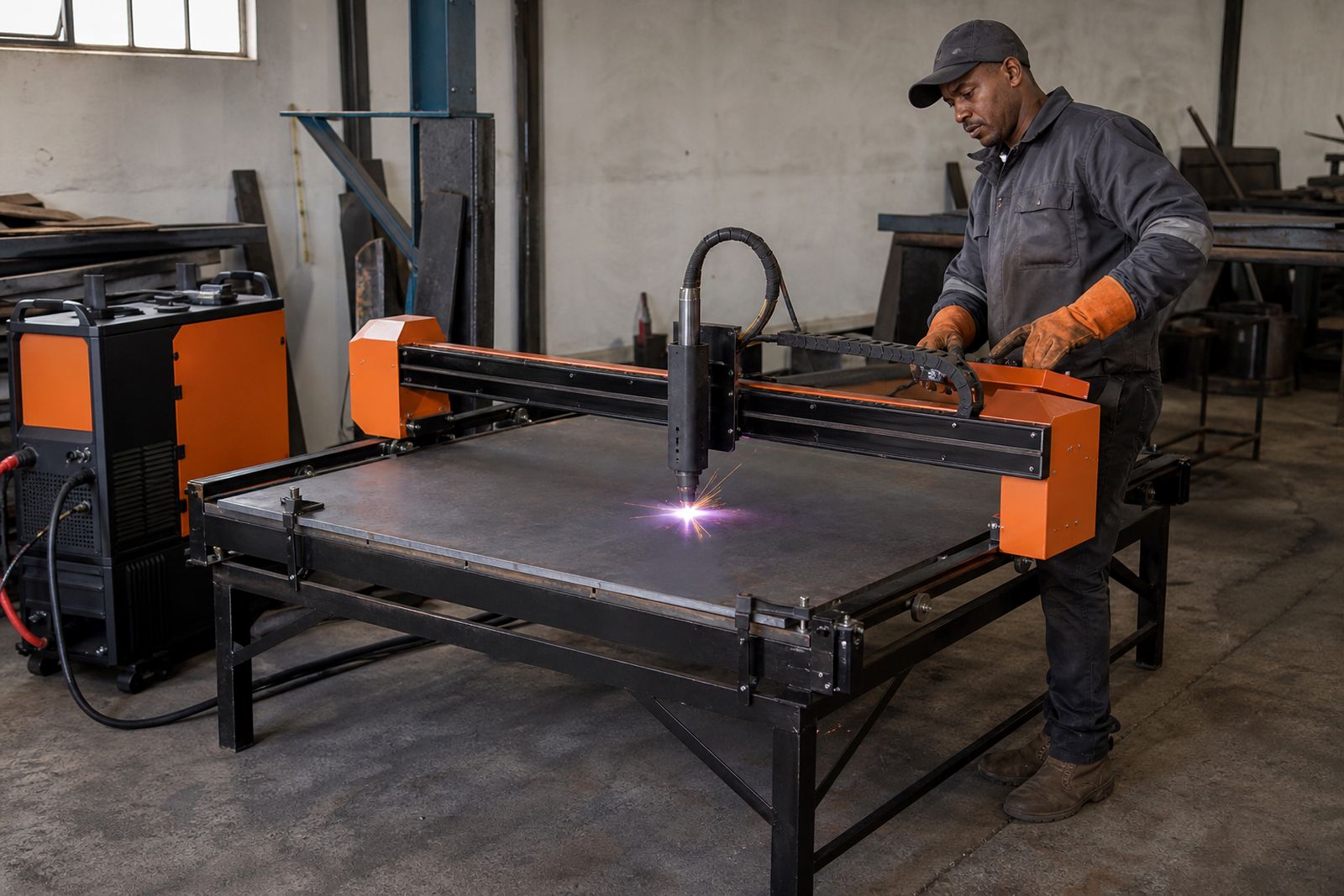
Bench-standard compact cutters suit shops that want a small CNC plasma table kept in one place and ready for daily work. Fixed-frame models suit settled workshop layouts, with bed sizes and machine layouts matched to available floor space and the plate sizes used most often.
A compact cutter that stays where the work happens
Some workshops need a fixed bench with a steady frame, a known cutting area and a layout that can sit beside the fabrication benches, the steel rack and the welding bays without shifting about. That is where bench-standard compact cutters make sense.
These machines are aimed at small fabrication shops, repair workshops, training rooms and farm workshops where repeatable cutting matters more than portability. A fixed bench also helps when operators cut the same bracket sets, gussets, base plates and patch parts every week, because the machine position, cable runs and air setup stay consistent.
- Best for indoor shop use on a prepared floor.
- Good for repeated part cutting in the same working area.
- Easier to keep square and level once installed.
- Suited to owners who want a compact machine that stays put.
How bench-standard differs from a portable frame
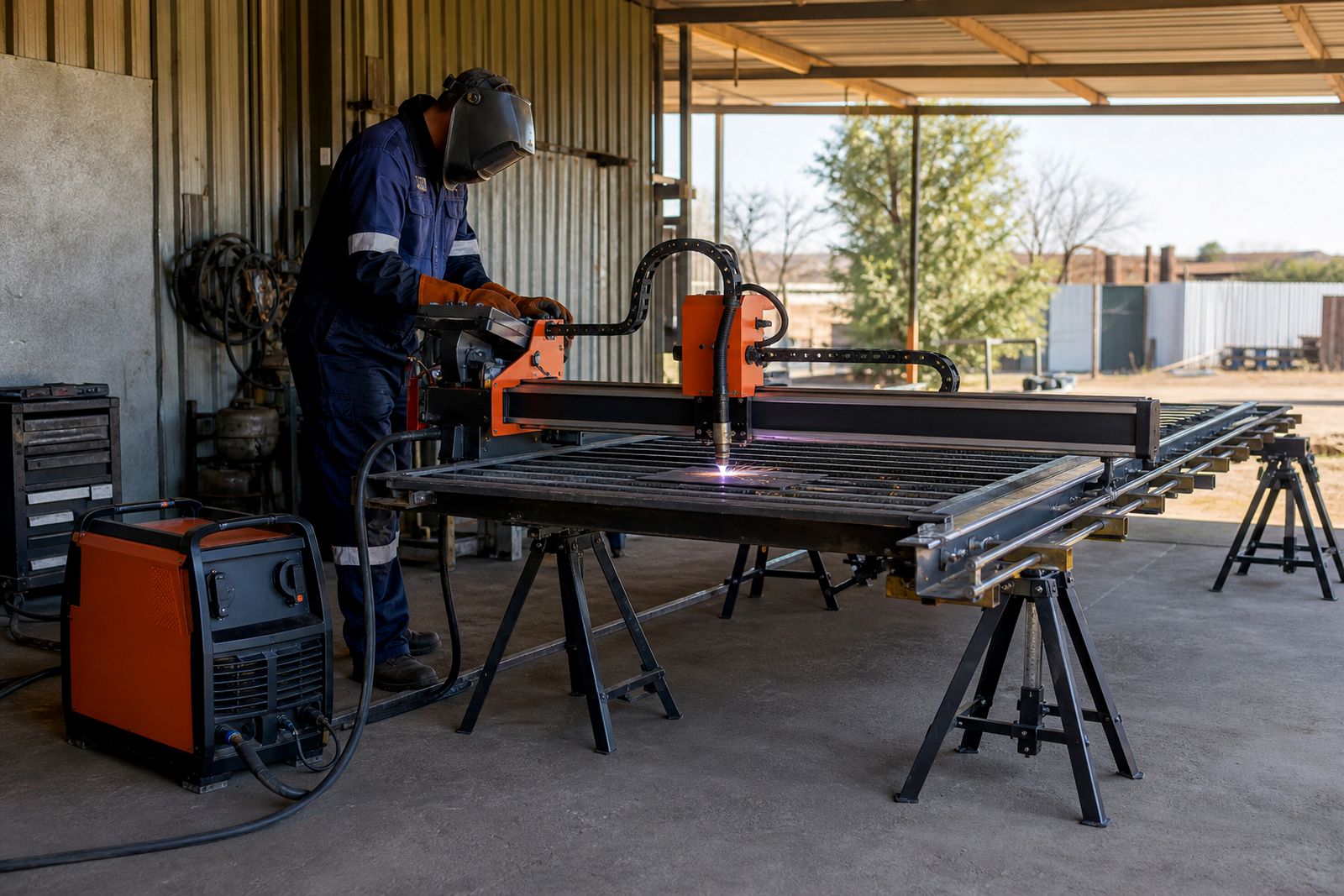
The frame style is one part of the difference. A bench-standard machine is chosen for a settled workspace where steel handling, extraction planning and operator movement can be worked out properly. Portable units are useful when the machine must travel, fit through tighter spaces or serve different sites. Bench-standard frames are for a shop routine with a set cutting station.
In Bloemfontein and across the Free State, that often means a machine placed near three-phase or single-phase supply points for the power unit, close to dry compressed air, and far enough from grinding dust to keep rails and motion parts cleaner. When a shop has the room, a fixed cutter usually feels more natural in day to day production.
- Portable frame: easier to move, useful for mobile work and changing sites.
- Bench-standard frame: better for a dedicated cutting area.
- Portable frame: chosen when transport and storage matter.
- Bench-standard frame: chosen when repeat layout and stable positioning matter more.
Picking the right cutting area for your shop
The right bed size depends on the plate sizes you actually buy and the parts you cut most often. Many smaller shops are better served by a compact bed that keeps walkways clear and still handles the bulk of daily work. If you regularly cut strips, tabs and smaller formed parts, an oversized table can waste floor area that would be better used for assembly or welding.
Think about plate handling from the door to the cutting area. A machine that fits the room on paper can still be awkward if full sheets cannot be brought in safely or if there is no room for unloading cut parts. Leave space at the long side for loading, and enough room at the ends for maintenance and torch access. It sounds obvious but cramped layouts cause trouble later.
- Measure the machine footprint and the operator space around it.
- Check the plate size you use most often, along with the biggest jobs you take on.
- Allow for compressor position and air dryer location.
- Keep clear access for loading, slag clean-out and service work.
Power unit, torch and air choices that affect the cut
The bench frame, plasma power unit rating, torch type and the quality of the compressed air all affect the cut edge, speed and thickness range. For lighter workshop work, lower amp units cover thinner plate and general bracket work well. Higher amp units are chosen when thicker steel, faster cutting on heavier plate or larger production batches justify the step up.
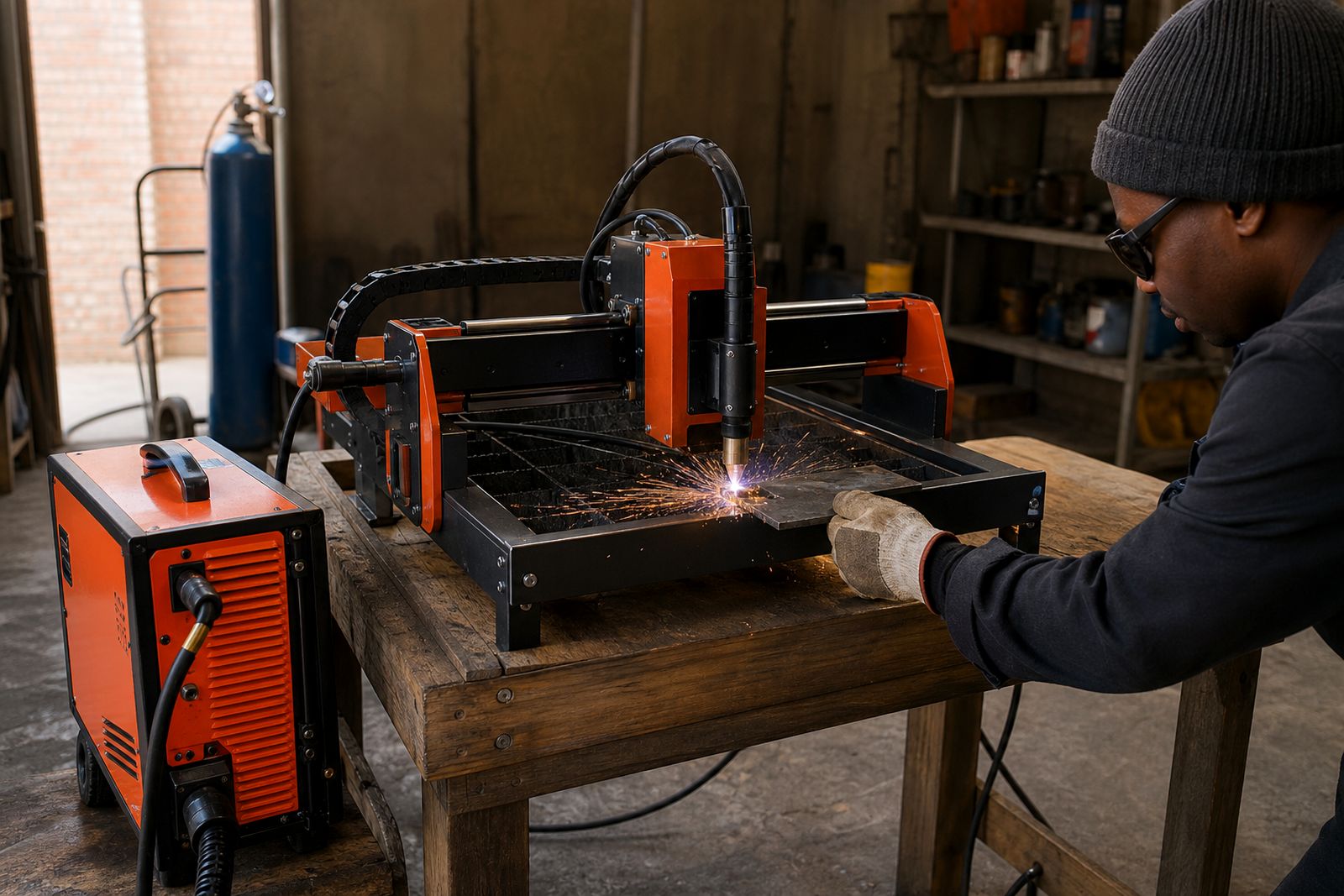
Machine torches are used for the CNC setup itself, while hand torches remain useful in the same shop for trimming, site repairs and work that does not belong on the table. Air quality matters more than many first-time buyers expect. Wet air shortens consumable life and can upset cut quality, especially during wet spells and cold mornings when condensation builds in smaller compressor systems.
- Lower amp systems suit lighter plate and lower electrical demand.
- Higher amp systems suit thicker steel and higher duty expectations.
- Machine torches are for table cutting.
- Hand torches help with manual jobs around the workshop.
- Dry compressed air supports cleaner, more consistent cutting.
What a fixed bench setup suits in the Free State
A bench-standard cutter is a practical fit for repair and fabrication work around Bloemfontein, Welkom, Bethlehem, Kroonstad and smaller towns where workshops handle gates, brackets, trailer parts, pump bases, tank stands and agricultural repairs. It also suits school and training workshop environments where a fixed teaching station is easier to supervise than a machine that can be shifted around.
For call-outs beyond the Free State, including Northern Cape work and Lesotho border towns, the key question is still whether the site has a settled workshop area. If the machine will remain in one bay and the operator wants a known cutting station with planned air supply and cable routing, a bench-standard frame usually beats a portable layout. If the machine must travel between jobs, the portable section will be the better place to compare options.
Before you move from portable to bench-standard
Shops often narrow the choice quickly once they compare daily use rather than headline specifications. If your work is mainly in-house, if your floor plan is settled and if you want the cutter ready in the same spot each morning, a fixed bench is usually the cleaner answer. If jobs move between yards, farms and client premises, portability remains the stronger route.
We sell compact cutters, air-plasma power units, torches, compressors and air dryers from Bloemfontein, with on-site operator training available across the Free State and further afield. Fixed bench frames suit shops that want a settled cutting station, while portable gantries suit work that moves between jobs. Send your shop details through our contact form to discuss the best fit.
Questions we get asked
Is a bench-standard compact cutter better than a portable machine for a small shop?
If the machine will stay in one workshop bay and most work is cut in-house, a bench-standard frame is usually the better fit. It gives you a settled cutting station, easier cable routing and a layout that does not need to be moved between jobs.
Can I pair a bench-standard frame with different plasma power sizes?
The frame choice and the air-plasma power unit choice are linked, but they are separate decisions. Smaller amp units suit lighter plate and general fabrication, while higher amp units are chosen for thicker steel and heavier workloads.
Do I need dry air for a compact bench cutter?
Dry compressed air helps keep cut quality steady and reduces avoidable wear on torch parts. In Free State workshop conditions, an air dryer is often a sensible addition, especially where compressors run hot or moisture builds up overnight.
Also worth a look
Tell us about the job
Send sizes, materials and where you are through our contact form, and we will come back with the practical options.
Open the contact form