P-1325P portable cutter, 1300 x 2500 mm
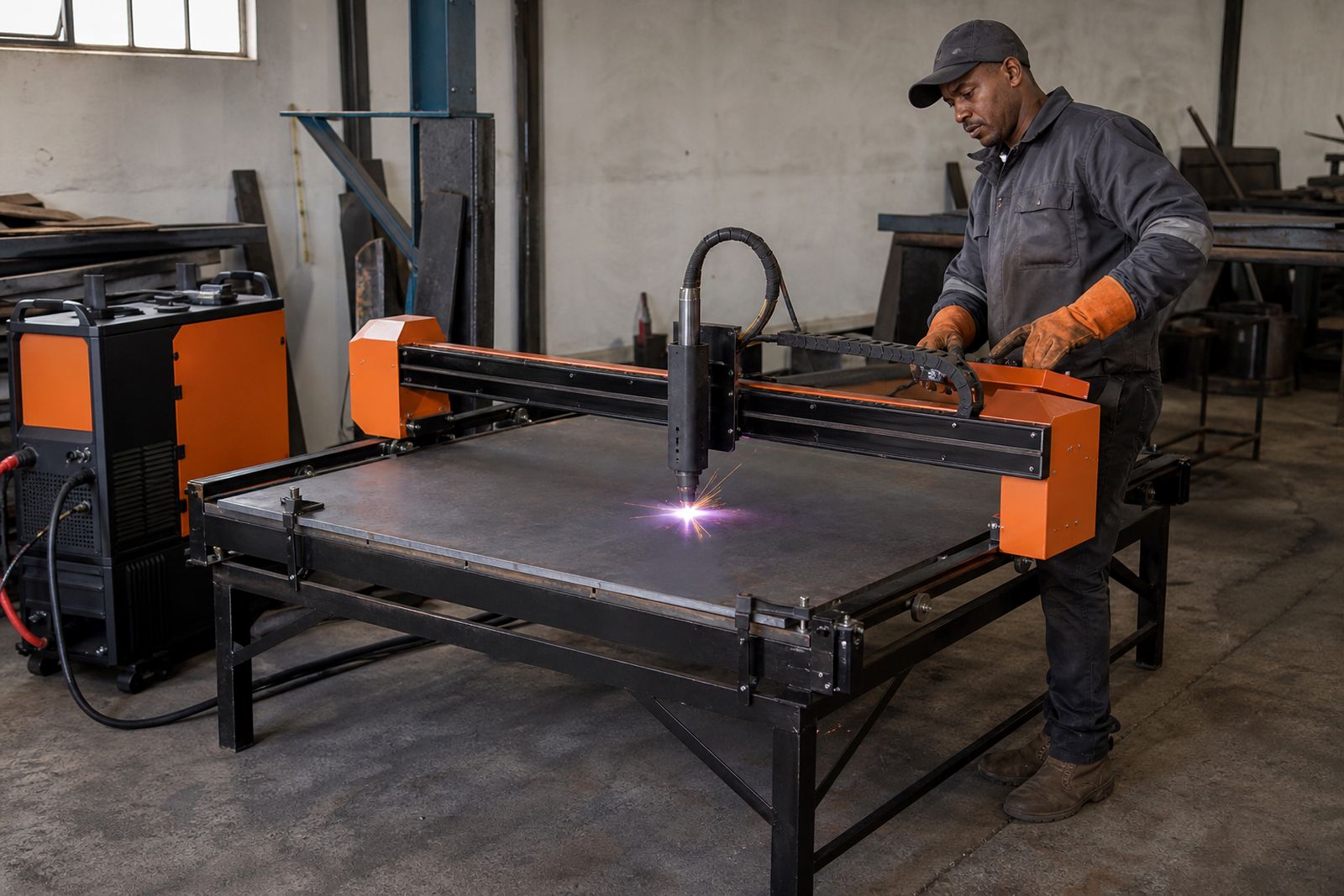
The P-1325P is the portable cutter in this range that takes a half sheet in one setup, which makes day to day plate work easier in a small shop. It gives you more table length than the smaller portable units without stepping into a fixed heavy gantry footprint.
Half-sheet capacity without a heavy floor build
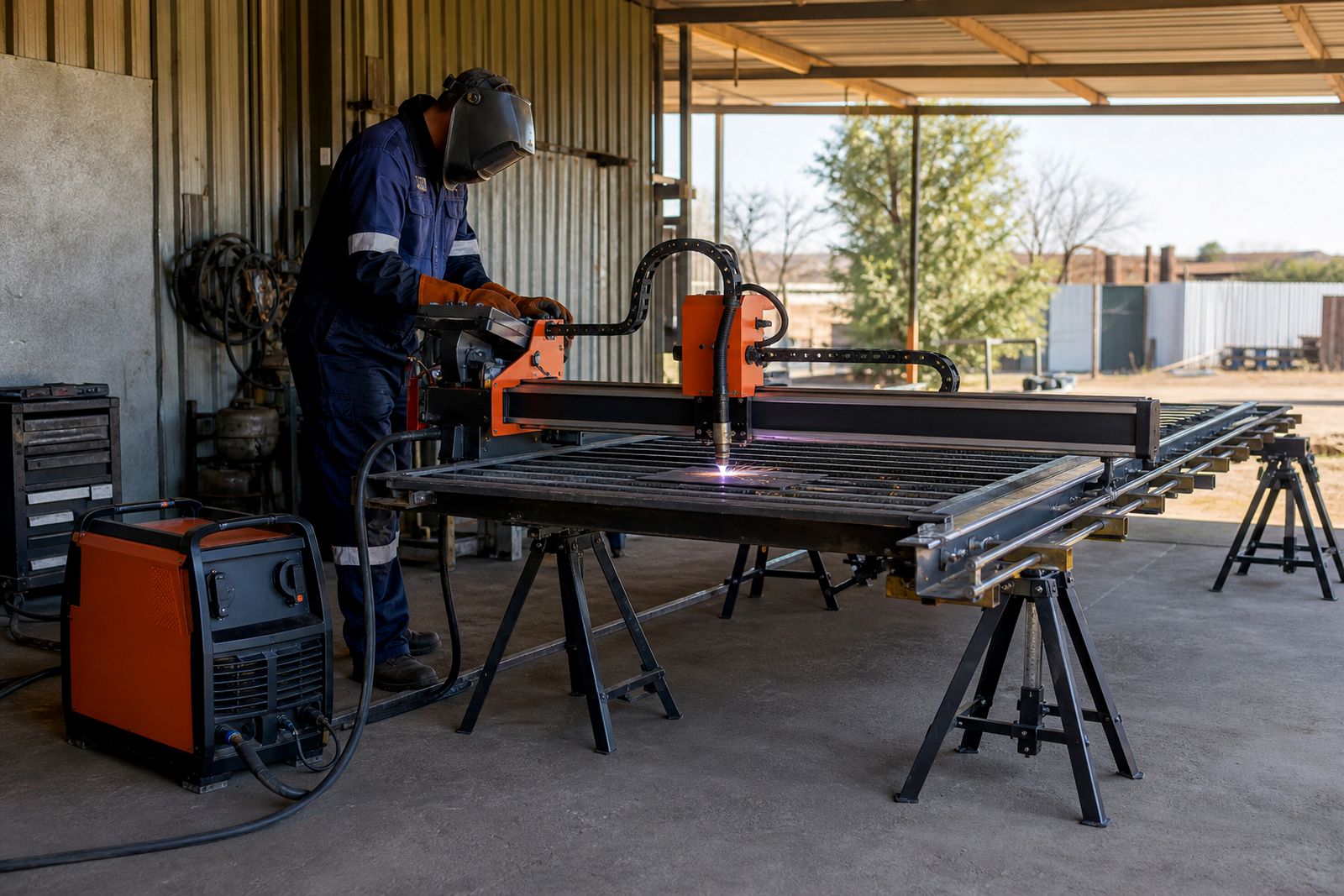
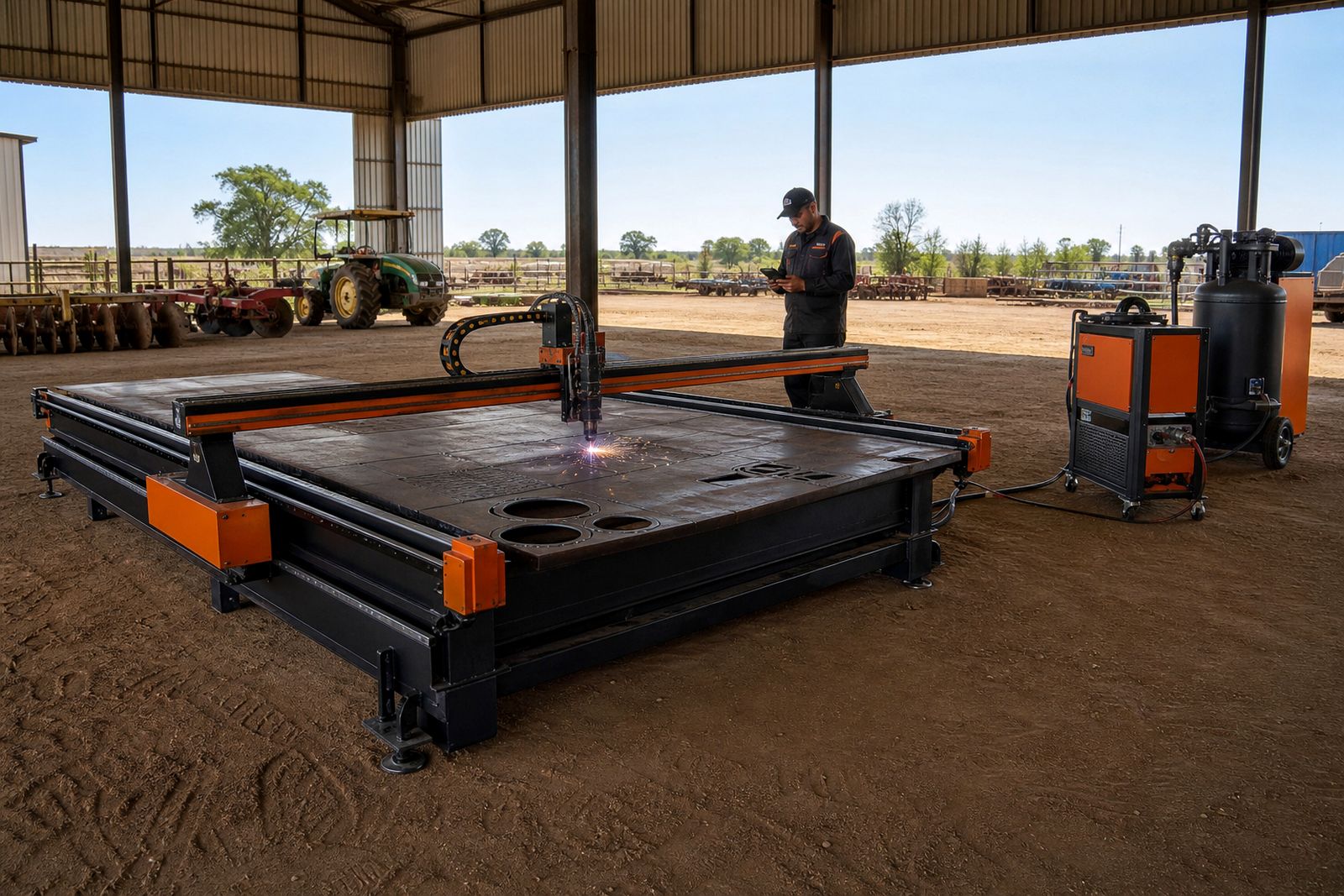
The P-1325P has a 1 300 x 2 500 mm working area, sized to handle common half-sheet plate in one setup. For many fabrication shops around Bloemfontein and the wider Free State, that size sits in a useful middle ground: large enough for brackets, gussets, base plates, trough parts and repair sections, but still portable enough to move, strip down and re-site when the layout of the shop changes.
This model suits teams that cut mild steel regularly and want cleaner repeatability than hand tracing. It also works well for farm workshops and mobile welding operations that need a machine cutter with sensible transport dimensions. The frame is compact compared with a fixed industrial table, so it fits shops where floor area must still be shared with welding bays, steel racks and assembly benches.
- Working area: 1 300 x 2 500 mm
- Portable gantry format for workshop or site-based use
- Suited to half-sheet nesting and repeat parts
- Pairs with air-plasma power units from 40 A to 200 A
Size options and practical working limits
On the P-1325P, the frame size is fixed at 1 300 x 2 500 mm, while the cutting package around it can be matched to the work you actually do. Smaller amp power units suit thinner plate, sign blanks, guards and general repair parts. Higher amp units are chosen where thicker mild steel shows up often and cut speed matters more. Torch type also depends on use: hand torches for flexible workshop jobs, machine torches where repeat production and height consistency matter.
Working limits also depend on air quality, plate flatness, slat condition and generator stability. A 200 A source on wet compressed air will still give poor edge quality, while a moderate amp source on dry air and flat plate often cuts neater than people expect.
- 40 to 85 A units suit lighter plate work and lower running demand
- 105 to 200 A units suit heavier sections and faster cutting on production runs
- Hand torch setup suits mixed repair work
- Machine torch setup suits repeated profiles and finer control
If you cut mainly thin sheet all week, this bed may be more machine than you need. This format suits half-sheet work, compact production and shops that do not need full-sheet handling or long industrial rails.
Where this model fits in the workshop
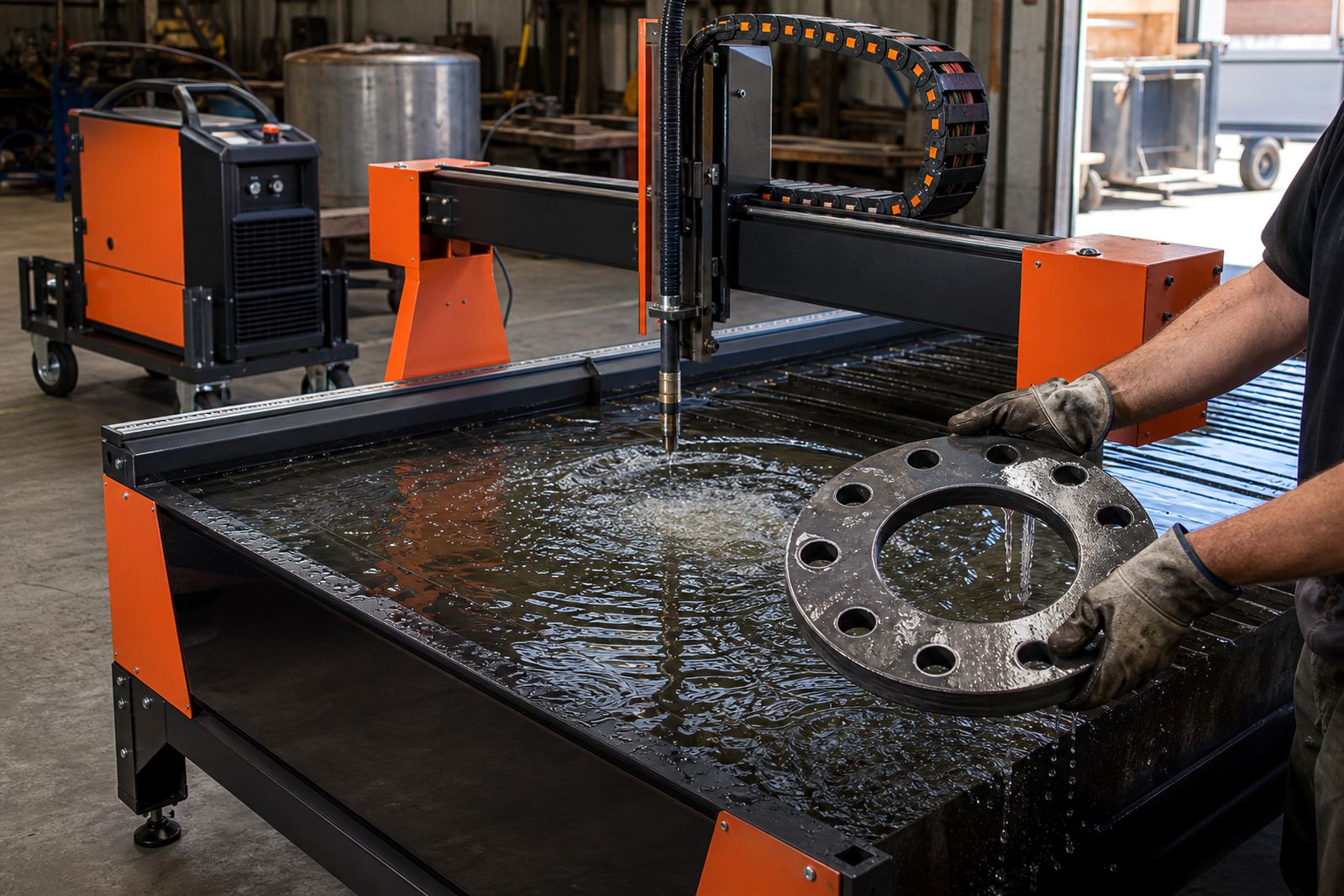
The P-1325P earns its place where jobs vary from one day to the next. Small fabrication shops use it for gate components, flange plates, cleats, machine repair parts, wear strips and short production batches. Agricultural customers often use this size for planter parts, chute plates, trailer repairs and replacement brackets. Because the machine is portable, it also helps teams that cannot commit one corner of the shop to a permanent large table.
This model suits practical compact production, repair work and small shop output. Jobs with continuous cutting over very large sheets, automated loading, heavy industrial duty cycles or a permanent extraction and handling line call for a different class of machine.
In smaller premises the extra 2 500 mm length is usually worth it, but make sure material can still be carried in and turned safely. We often find the machine itself fits well while the real pinch point is sheet handling next to a wall.
Power, air and site conditions
Before the machine arrives, the important checks are power, air and floor space. The gantry needs a stable working surface and enough clearance around the bed for loading plate, checking cut parts and cleaning slats. The workshop floor should be firm and reasonably level so the rail path is not fighting twists in the base.
Air supply matters just as much as the power unit. Clean dry air protects consumable life and cut quality, especially in summer humidity and after cold early mornings when moisture collects in lines. In the central Free State this often gets overlooked until edge quality drops or the torch starts misbehaving.
- Allow room for the 1 300 x 2 500 mm bed plus operator access on all sides you plan to use
- Match mains or generator capacity to the chosen plasma power unit
- Use a compressor sized for continuous cutting duty
- Add an air dryer where moisture is a known issue
- Keep plate storage close enough to load safely without dragging over the rails
Day to day care and sensible upkeep
Portable cutters last better when the small habits are right. Keep the rails clean, remove dross before it builds into the slat area, and check cable routing after moving the machine. If the unit is used on farm sites or in open sheds, dust and windblown grit need more attention than people think. A few minutes spent cleaning after each shift saves a lot of frustration later.
The machine still needs normal cutting upkeep, including torch consumables and regular checks. Watch for signs of wet air, worn tips, poor earthing and plate that has lifted off the bed. Those are common causes of rough starts and uneven cut lines, not a fault in the frame itself.
Operator training is available on site, which helps new users set cut height, travel speed and pierce habits properly from the start. That matters on a machine of this size because one bad habit repeated across a 2 500 mm run wastes more plate than most shops realise.
Details that help us point you to the right package
When you send an enquiry for the P-1325P, include the material types you cut most, the thickness range and whether the machine will live in one workshop or travel between sites. Also tell us if you already have a compressor, whether you need a machine torch or hand torch setup, and if generator use is part of the plan. That gives us enough to suggest a workable package rather than a mismatched one.
It also helps to mention your town, especially for call-outs beyond Bloemfontein. We work across the Free State and travel further into the Northern Cape, Lesotho border towns and other parts of South Africa for the right setup. For pricing on starter bundles, training and air equipment, send the job details through our contact form.
- Your usual material type and thickness range
- Expected sheet sizes and whether half-sheet loading is enough
- Available power supply or generator details
- Compressor size and whether air drying is already in place
- Workshop location and access for delivery or training
What our Portable Plasma Cutter customers say
Verified Google reviews
Questions we get asked
Can the P-1325P take a standard half sheet without repositioning?
Its 1 300 x 2 500 mm working area is intended for half-sheet cutting in one setup, which is useful for common plate sizes used in fabrication and repair work.
Is this the right machine for full industrial production?
The P-1325P is aimed at compact production, repair work and small shop output. Heavy fixed gantry lines suit large-sheet handling and industrial throughput.
Do I need dry air for this machine?
Dry clean compressed air helps maintain cut quality and reduces avoidable torch problems. In local conditions, an air dryer is often worth fitting where moisture shows up in the line.
Also worth a look
Tell us about the job
Send sizes, materials and where you are through our contact form, and we will come back with the practical options.
Open the contact form