P-1313P portable cutter, 1300 x 1300 mm
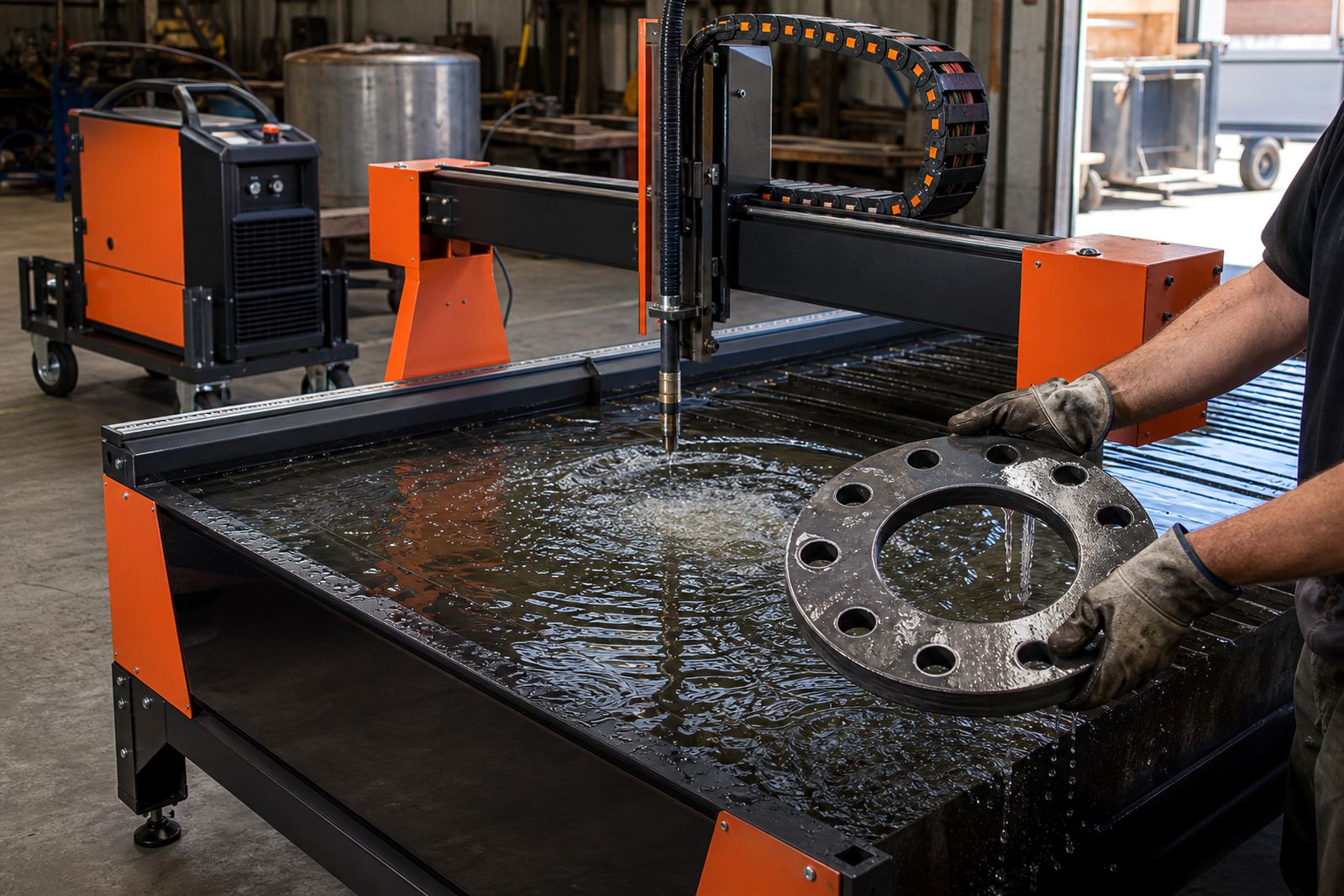
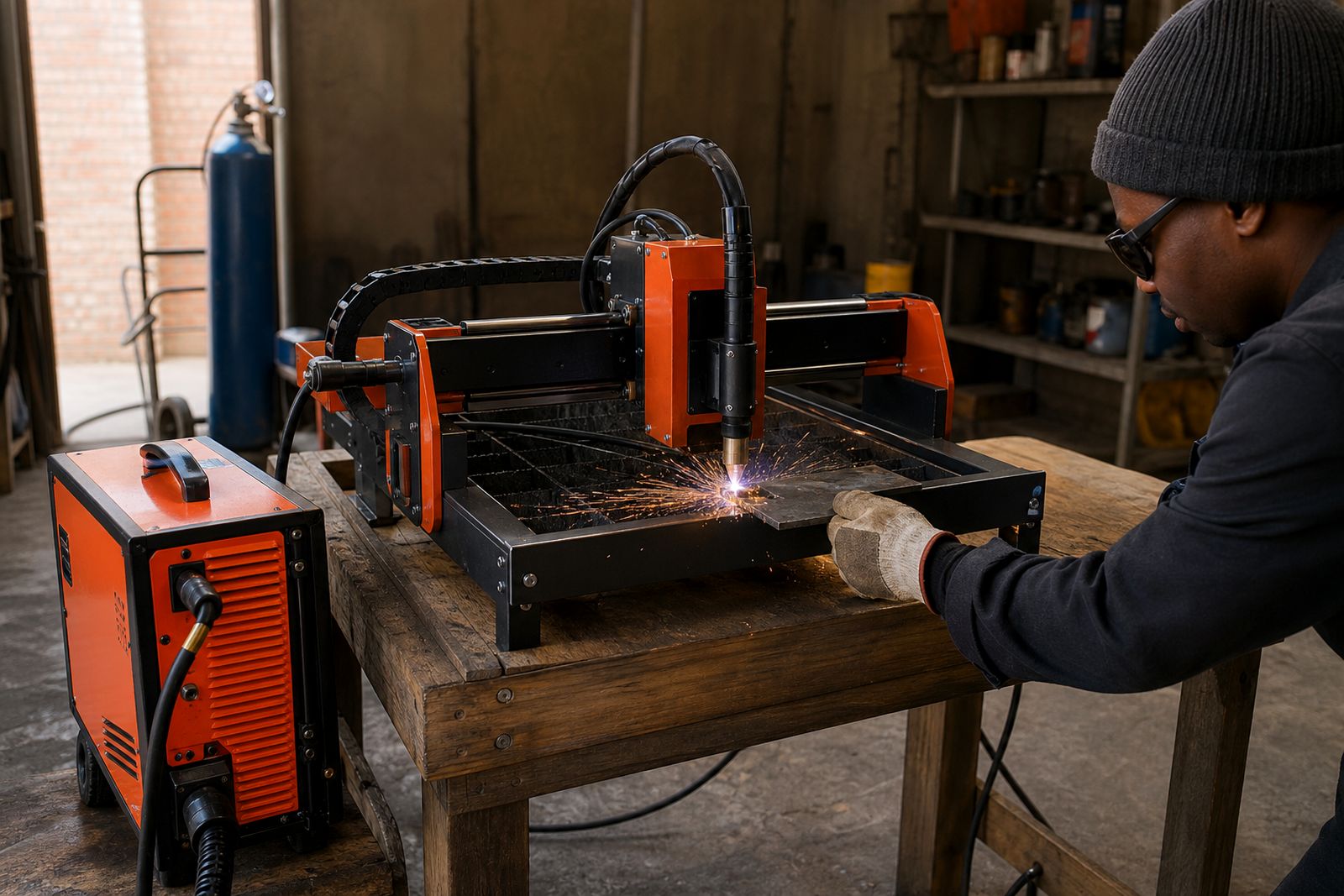
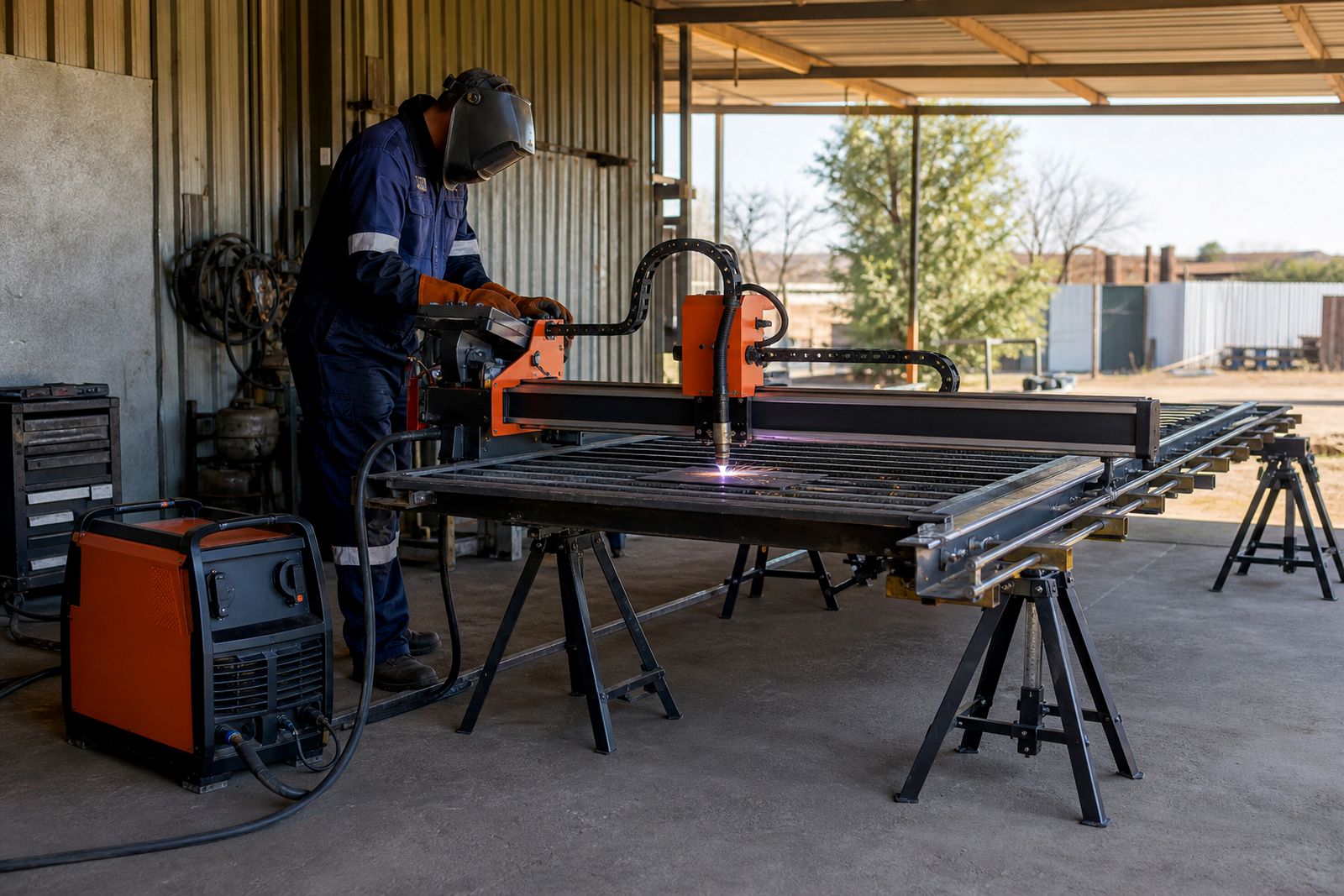
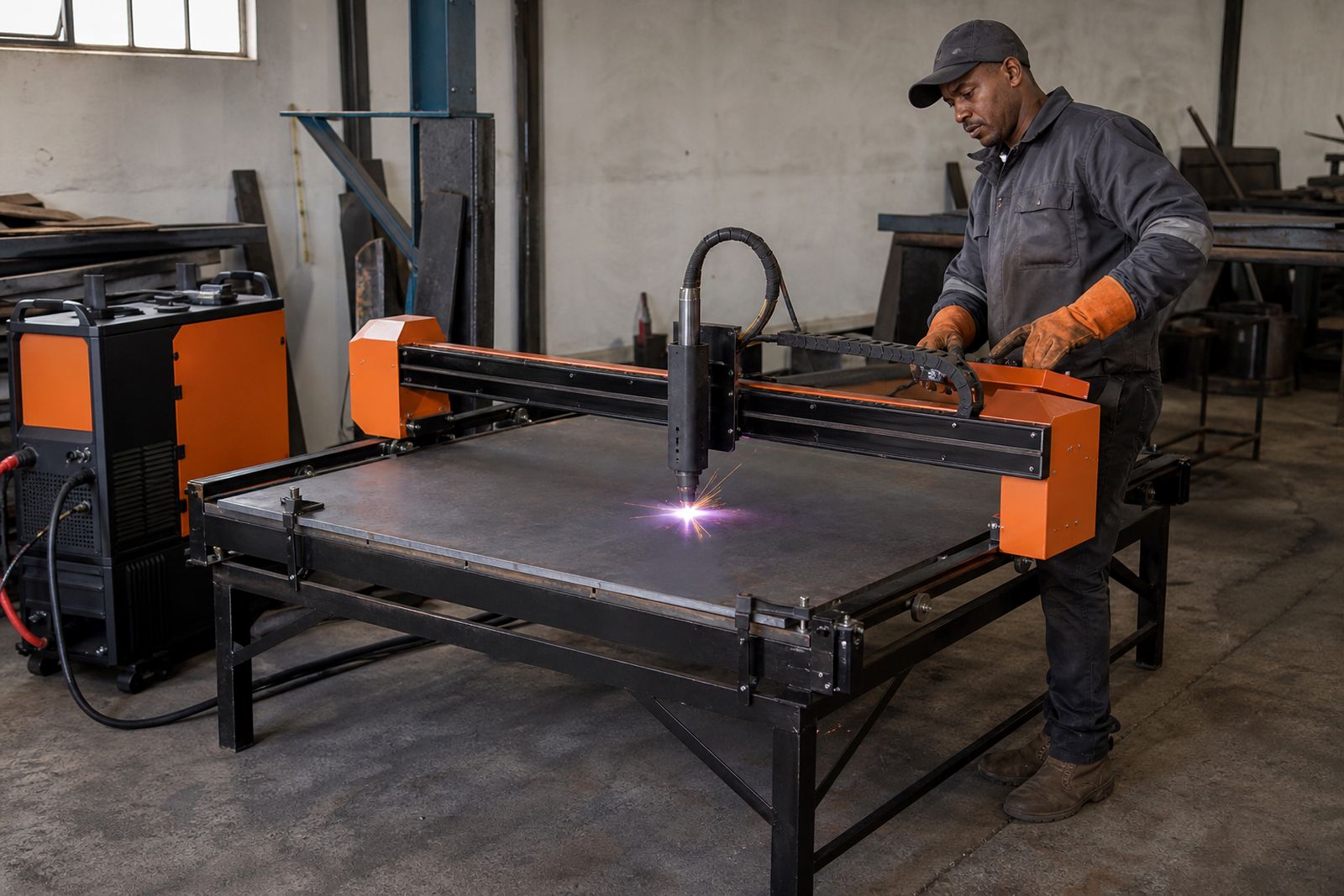
The P-1313P is a square-bed portable CNC plasma cutter for plate work that suits workshops using a compact table. It fits flanges, base plates, gussets and trailer parts in steady batches from one compact footprint.
A square format that fits common plate work
The P-1313P gives you a 1 300 x 1 300 mm working area on a portable gantry frame, which makes it useful where parts are broad rather than long. In small fabrication shops around Bloemfontein, this bed shape often fits the real mix better than a narrow long table. Base plates, cover plates, cleats, stiffeners, brackets and trailer components can be nested without carrying a three metre frame when the work does not need it.
The machine is intended for mild steel, stainless steel and aluminium with the final cut range depending on the power unit chosen. It is a practical option for farm repair teams, mobile welders with a fixed workshop, and fabrication shops that need CNC accuracy without moving into a heavy gantry setup. The frame stays compact, and the cut area is still large enough for many daily plate jobs.
- Working area: 1 300 x 1 300 mm
- Portable gantry layout for workshop use
- Suited to square and near-square nests
- Available with air-plasma power units from 40 A to 200 A
- Hand and machine torch options available
Sizes, power choices and realistic cutting limits
The frame size stays the same, while the power source is matched to the thicknesses you expect to cut most often. Lower-current units suit thinner plate and lighter electrical demand. Higher-current units improve cut speed on thicker material and give more headroom when your work changes from week to week.
For decorative panels and light brackets, a 40 A to 60 A setup can be enough. For regular bracket work, trailer sections and base plates in medium thicknesses, many shops look at 80 A to 105 A. If your jobs move into heavier plate, 125 A to 200 A options are available, but the practical choice depends on your supply and the finish you need on the cut edge.
- 40 A to 60 A: light sheet and thinner plate, lower running demand
- 80 A to 105 A: a common range for mixed fabrication work
- 125 A to 200 A: thicker plate, heavier electrical demand, faster cutting on suitable jobs
- Machine torch setup for CNC cutting, with hand torch options for related workshop work
- Starter bundles can include compressor and air dryer where needed
If you already know your normal plate thickness, tell us the usual range and the thickest plate you cut only occasionally. That helps match the gantry and power unit sensibly without oversizing the package.
Where the P-1313P earns its floor space
This model makes sense when your parts fit a square nest and you want a machine that does not dominate the shop. It works well in small fabrication bays, agri repair workshops and general engineering shops handling short-run production. The square bed is especially handy for repeated plate items where material handling is easier from either side.
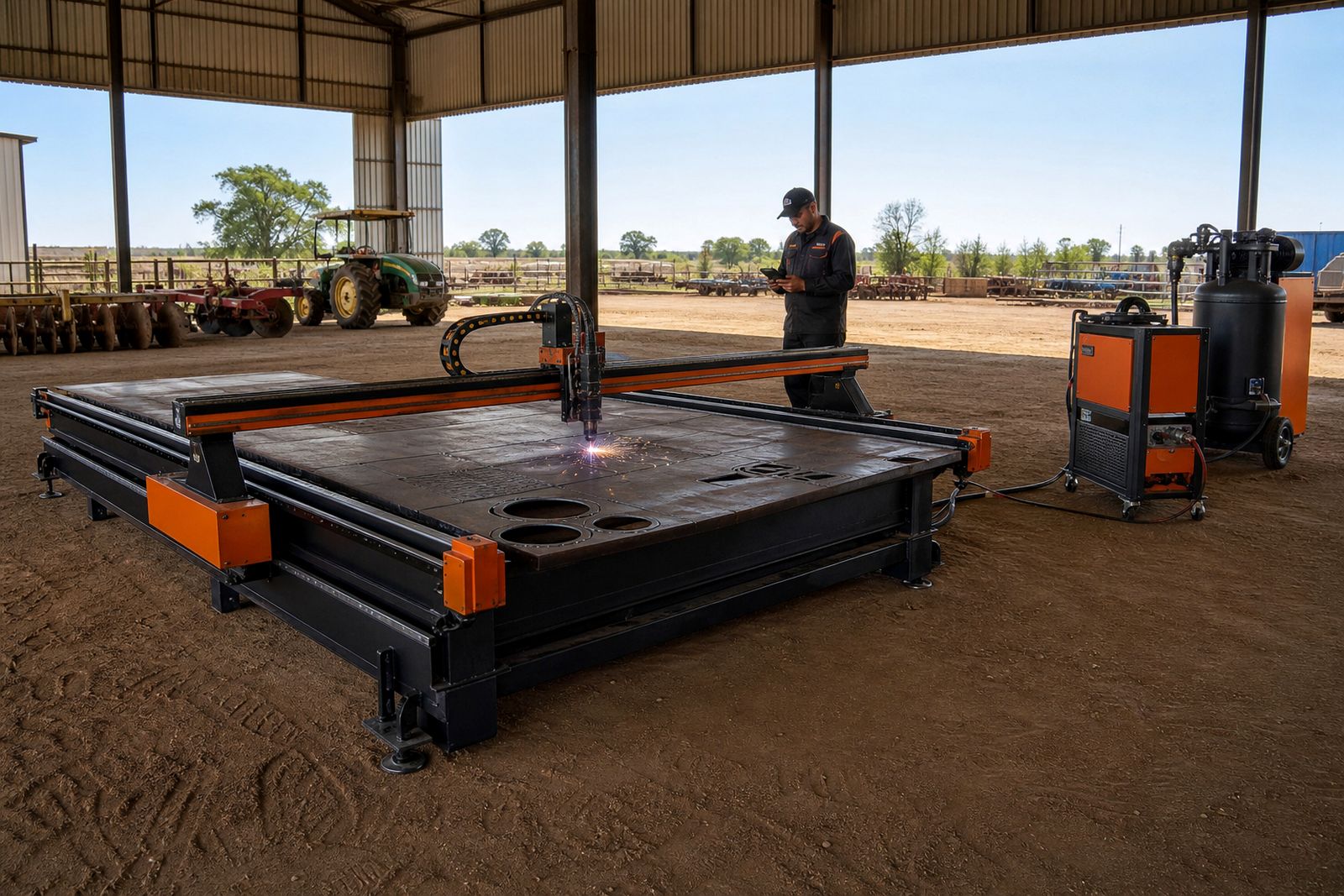
The P-1313P suits flanges, base plates, gussets, trailer parts and other compact plate work within a 1 300 x 1 300 mm format. Larger 1 500 x 3 000 mm beds suit long rails, sheet strips, long signage panels and production work built around longer parts. Heavy industrial tables also suit thick plate and high duty cycles better. If your work is mostly long trailer side members or long gusset strips, one of the longer bed models will usually fit better.
- Good fit for flanges and pipe support plates
- Useful for base plates, mounting plates and gussets
- Works well for trailer cross-members and shorter trailer parts
- Less suited to long components that need a rectangular bed
- Suited to lighter workshop duties than a heavy industrial gantry system
Power, air and the spot where it will stand
Like any CNC plasma setup, the P-1313P needs stable electrical supply for the chosen power unit and clean dry compressed air. In the Free State, dusty workshops and winter moisture swings can show up quickly in consumable life and cut quality, so air preparation matters more than many buyers expect. A machine can cut well on ordinary days, then start giving inconsistent edges when wet air gets into the torch line.
Plan for a level floor, room to load sheets safely, and access around the bed for clamping and material handling. If you are in a farm workshop or outlying town where supply conditions vary, mention that when you send your details. Generator use calls for proper sizing and stable output.
- Level workshop floor with clear access around the machine
- Power matched to the selected plasma unit
- Dry compressed air, with dryer strongly recommended
- Enough space for plate loading, cable routing and operator movement
- Generator use only with suitable output and sizing
Day-to-day care and operator habits
The machine does best with basic routine checks rather than neglect followed by a big service. Keep the rails clean, check cable routing, drain compressor moisture and watch torch consumable wear. Dirty air and worn consumables show up first in edge quality, pierce behaviour and dross build-up.
For workshops near dusty yards or gravel loading areas, wipe-downs matter. Fine dust settles where it should not, and then small tracking issues start creeping in. If several operators share the machine, standardise pierce height, cut height and material setup so jobs do not vary from shift to shift for no good reason.
On-site operator training is available for teams that want a cleaner handover into daily use, especially where CNC plasma is new to the workshop.
What to send with your enquiry
Accurate pricing for the P-1313P depends on your cutting setup and job mix. The power unit, torch arrangement and air setup depend on the material and thickness range you cut in real work, with the usual cutting range carrying more weight than the thickest plate listed in a brochure. Send the details through our contact form and include the points below.
- Your town and whether the machine will stay in a workshop or at a farm repair site
- Main materials cut, such as mild steel, stainless steel or aluminium
- Usual plate thickness and the maximum thickness you expect to cut
- Typical part types, for example base plates, flanges, trailer brackets or gussets
- Available power supply and whether generator use is part of the plan
- Whether you need a machine torch only, or a package with hand torch, compressor and dryer
If you already know that your jobs are mostly square nests rather than long strips, say that as well. It helps confirm whether this 1 300 x 1 300 mm layout is the best fit or whether a longer bed will save material and handling time.
What our Portable Plasma Cutter customers say
Verified Google reviews
Questions we get asked
Can the P-1313P cut trailer parts?
It suits many shorter trailer components such as brackets, gussets, mounting plates and cross-member parts that fit a square nest.
Is 1 300 x 1 300 mm enough for general fabrication?
For many plate jobs, it is a strong fit where parts are broad and compact, while long strips and long side members usually need a larger rectangular bed.
Do I need dry air for this machine?
Clean dry compressed air helps cut quality, consumable life and consistent piercing, especially in workshops with dust or changing winter moisture conditions.
Also worth a look
Tell us about the job
Send sizes, materials and where you are through our contact form, and we will come back with the practical options.
Open the contact form